Reminiscence therapy kits: do they actually improve cognition?
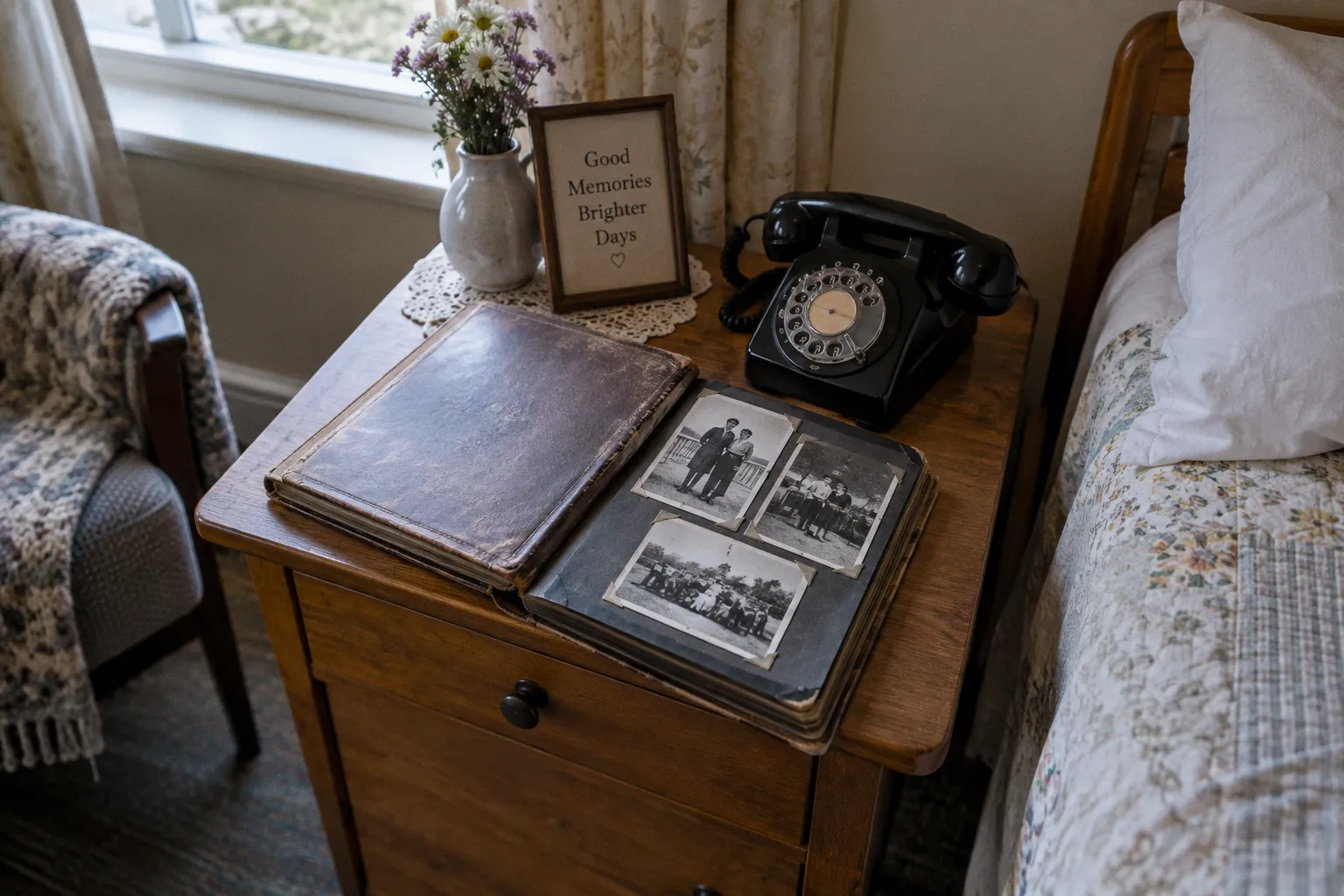
The appeal is understandable. If a familiar object can start a conversation, reduce apathy, or help a resident settle during a difficult part of the day, it may appear to offer both emotional and cognitive value.
The clinical answer is more measured. Reminiscence therapy can support mood, reduce depressive symptoms, and improve participation in meaningful activity. Some studies also find modest improvements on global cognitive tests. But the evidence does not show that a commercial kit reverses dementia, reliably restores lost abilities, or produces the same results for every resident. The value is usually found in the quality of the interaction around the materials—not in the box itself.
The clinical reality of cognitive stimulation: beyond the hype
Reminiscence therapy is not simply looking at old photographs. It is a structured activity that uses autobiographical prompts to support communication, orientation to personal identity, emotional connection, and social participation. The prompts may include:
- Photographs of familiar people, places, occupations, or community events
- Music associated with a person’s cultural background or adult life
- Objects connected with work, cooking, sewing, gardening, military service, travel, or family routines
- Tactile materials such as fabric, tools, postcards, household items, or textured objects
- Familiar scents, when they are safe and acceptable to the individual
- Conversation prompts that help a caregiver explore a person’s preferences and life experiences
Long-term memories are not uniformly preserved in dementia, and we should not assume that every resident will respond to the same kind of cue. A person may recognize a song but not identify the year it was popular. Another resident may remember the physical process of kneading dough but become distressed by questions about who taught them. Someone else may engage more fully with the texture of wool or the sound of a radio than with a photograph.
This is why we describe the response as a behavioral expression rather than a pass-or-fail memory test. Engagement may look like a few words, sustained eye contact, relaxed posture, humming, sorting objects, smiling, or remaining present for several minutes. A resident does not need to provide a correct date or name for the activity to be clinically meaningful.
The distinction matters because cognitive stimulation products are often evaluated as if success means a higher score on a standardized test. Those tests have a place in care planning, but they capture only one part of the outcome. If the intervention helps a resident participate in a meal, communicate a preference, or recover from afternoon agitation, that benefit may not appear as a dramatic change on the Mini-Mental State Examination.
A reminiscence kit is not a treatment because it contains old objects; it becomes therapeutic when the objects support a safe, meaningful interaction.
What a kit can and cannot do
A well-designed activity can support several goals at once:
1. Increase engagement. Familiar prompts may make it easier for a resident to enter an activity without having to learn unfamiliar rules.
2. Support conversation. Objects can provide a concrete focus when open-ended questions feel confusing.
3. Reduce apathy. Sensory and autobiographical cues may help a person initiate or sustain participation.
4. Promote emotional comfort. Familiar music, textures, or photographs can reinforce a sense of identity and continuity.
5. Improve staff understanding. A resident’s reactions can reveal preferences, environmental triggers, and personal history that are useful beyond the session.
A kit is less likely to help when it is used as a generic distraction, presented too quickly, or treated as a test of memory. It also cannot be expected to change the underlying neurodegenerative process. Reminiscence therapy does not cure Alzheimer’s disease or other dementias, and it should not replace medical assessment when a person develops new confusion, agitation, sleep disruption, pain behaviors, or a sudden decline in function.
What systematic reviews reveal about memory gains
The research on reminiscence therapy is encouraging in some areas and limited in others. A Cochrane systematic review published in 2018 included 22 studies involving 1,972 participants. People receiving reminiscence therapy scored slightly better on cognitive tests immediately after treatment than comparison groups, but the overall findings varied by setting and intervention design. Effects on quality of life and longer-term outcomes were not consistently demonstrated.
A later meta-analysis published in 2026 reviewed 26 studies with 2,766 participants and reported an improvement in cognitive function, with a standardized mean difference of 0.74 and a 95% confidence interval from 0.40 to 1.08. The same analysis also reported improvements in depressive symptoms and quality of life. However, the results should not be translated into a promise that an individual resident will show a noticeable improvement on a cognitive screening test.
There are several reasons for this caution.
The intervention is not standardized
One study may use individual sessions twice each week for 13 weeks. Another may use a group activity over four weeks. The prompts, staff training, session length, resident diagnoses, and comparison treatments can all differ. A personalized family album used in a quiet one-to-one session is not equivalent to a pre-packaged box used in a noisy day room.
When interventions are grouped together in a meta-analysis, the combined result tells us that reminiscence approaches can be beneficial on average. It does not identify one ideal kit, one required session length, or one product that will work across all stages of dementia.
Cognitive tests measure only part of the outcome
The MMSE and similar tools may capture orientation, recall, attention, language, and basic cognitive function. They do not measure every change that matters in residential care. A person may remain unable to recall the name of a childhood town but become more willing to join a group, show less withdrawal, or communicate more comfortably with staff.
That does not make the cognitive result irrelevant. It means we should use a wider outcome set. When evaluating reminiscence therapy activities for seniors, we should consider both formal measures and observable changes in daily function.
Gains may be modest or short-lived
The available evidence does not establish how durable cognitive improvements are after sessions stop. This is one of the important unanswered questions in evaluating dementia cognitive stimulation products. A program may support attention and engagement during the period when it is delivered, while its longer-term effect remains uncertain.
That is not a reason to dismiss it. Many supportive interventions in memory care are valuable because they improve the experience of the day, not because they permanently alter the disease course. But the distinction should be clear when a facility or family is deciding how much money, staff time, and training to devote to a program.
Behavioral outcomes are not guaranteed
The 2026 meta-analysis found no significant reduction in caregiver burden or behavioral symptoms overall. This is consistent with the practical reality we see in care settings: a reminiscence session may help one resident settle and may have little effect on another person’s wandering, resistance to care, or evening distress.
Behavioral symptoms usually have multiple contributors. Pain, constipation, medication effects, hearing loss, sleep disruption, overstimulation, unmet needs, and environmental triggers can all influence behavior. A memory box cannot compensate for an untreated urinary infection or a poorly timed care routine.
Physiological evidence: EEG markers and sensory engagement
Some researchers have examined whether reminiscence therapy produces measurable physiological changes in addition to changes in mood or behavior. A clinical study reported a positive association between reminiscence therapy and EEG alpha and beta wave activity. These patterns were interpreted as consistent with relaxation and cognitive engagement during the intervention.
This is useful evidence, but it needs to be described accurately. EEG changes during an activity do not demonstrate that the therapy has slowed neurodegeneration or produced durable cognitive recovery. They suggest that the brain is responding to the sensory and social demands of the session. The same study did not find a statistically significant improvement on the revised Hasegawa Dementia Scale.
For caregivers, the practical implication is not that you need physiological monitoring to run a good session. It is that the sensory baseline matters. We want to know how a person usually responds to sound, touch, light, smell, and social proximity before we introduce more stimulation.
A resident who is relaxed in a quiet room may become distressed when several objects, a loud recording, and multiple questions are presented together. Another person may need a stronger sensory cue because a photograph alone does not hold attention. The intervention should be adapted to the person rather than delivered according to a fixed script.
Why multisensory prompts can be helpful
Different sensory channels may reach a person at different stages of cognitive impairment. A photograph may be difficult to interpret, while a familiar song produces immediate recognition. A written prompt may not be useful, while holding a wooden measuring spoon leads to spontaneous conversation about cooking.
Sensory prompts can also reduce the pressure to answer correctly. Instead of asking a sequence of questions, we can offer one object, pause, and observe. The resident may touch it, turn away, vocalize, smile, or begin speaking. Each response gives us information.
A practical session often works best when it follows this order:
1. Prepare the environment. Reduce competing noise, position the resident comfortably, and make sure glasses and hearing aids are available if used.
2. Offer one prompt. Avoid placing an entire collection in front of the resident at once.
3. Allow processing time. A delayed response is not necessarily a lack of interest.
4. Follow the resident’s lead. If the person focuses on texture rather than the associated memory, stay with the sensory experience.
5. Use open, non-testing language. Ask what the item brings to mind rather than demanding a name, date, or explanation.
6. Stop when the behavioral expression changes. Turning away, pushing objects aside, tightening the jaw, or becoming restless may signal fatigue or overstimulation.
7. Record what was useful. Note the prompt, the time of day, the response, and any environmental triggers.
This approach turns a memory activity into an individualized care intervention. It also prevents a common mistake: interpreting a lack of verbal recall as a lack of benefit.
The emotional impact: apathy and depressive symptoms
The most consistent evidence for reminiscence therapy relates to emotional well-being. Systematic reviews have found reductions in depressive symptoms, and one meta-analysis of 24 randomized controlled trials reported a Cohen’s d effect size of -0.541, with a 95% confidence interval from -0.847 to -0.234. Reviews have also reported reductions in apathy.
These outcomes are clinically important. Apathy can look like refusal, indifference, or inability to participate, but it may reflect reduced initiation rather than a deliberate choice. A carefully selected prompt can provide an accessible starting point. The person does not have to generate an activity from scratch; the object, sound, or image offers a pathway into participation.
Depression and dementia also overlap in ways that make observation essential. A resident may show reduced speech, sleep changes, slowed movement, withdrawal, or loss of interest. Reminiscence therapy may help with engagement, but it is not a substitute for assessment of depression, medication effects, pain, sleep, or other health conditions.
The strongest sessions are not built around forcing positive emotion. We should not insist that every memory be pleasant or that every resident smile. Some personal memories include grief, conflict, migration, illness, or loss. If a prompt brings distress, we acknowledge the response and redirect without arguing or insisting that the person continue.
A meaningful memory is not always a happy memory
This is particularly important when families assemble a memory box. A photograph of a deceased spouse may be comforting on one day and painful on another. A uniform or workplace object may support identity but also bring difficult associations. A familiar song may calm one resident and increase distress in another.
Caregivers should watch for the whole behavioral expression:
- Does the person appear more settled or more tense?
- Is breathing relaxed or rapid?
- Does the resident remain engaged by choice, or continue only after repeated prompting?
- Does the activity support communication, or does it lead to perseveration and distress?
- Is the person more comfortable afterward, or fatigued and withdrawn?
The goal is not to extract a story. The goal is to support a person’s sense of agency and connection.
Commercial kits versus personalized memory boxes
The practical question for many families and memory care teams is whether a commercial kit justifies its cost compared with a personalized memory box, photo album, or collection of familiar objects.
There is currently no established evidence showing that commercial pre-packaged reminiscence kits are superior to individualized materials. This is one of the important unknowns in the research. A kit may be convenient, professionally organized, and useful when a facility is building a program from the ground up. But convenience is not the same as clinical superiority.
| Option | Main advantage | Main limitation | Best use |
|---|---|---|---|
| Commercial reminiscence kit | Ready-to-use materials and a structured activity format | May contain prompts that do not match the resident’s life, culture, or sensory preferences | Staff training, group programming, or starting a new activity program |
| Personalized memory box | Closely connected to the person’s identity and history | Requires family input, labeling, storage, and regular review | One-to-one sessions and individualized care planning |
| Photo album or digital slideshow | Easy to update and share with family | Images may be difficult to interpret, and screens can create glare or distraction | Guided conversation with a familiar caregiver |
| Music-based collection | Can prompt engagement even when language is limited | Volume, lyrics, or associations may cause distress | Short, supervised sessions matched to the resident’s sensory baseline |
| Mixed sensory collection | Offers tactile, visual, auditory, and olfactory prompts | Too many inputs can overwhelm the resident | Carefully paced sessions for people who respond to sensory cues |
The best choice depends on the resident, not the packaging. If staff members do not know the resident’s history, a generic kit may produce only superficial interaction. If a family provides a box filled with fragile or highly personal objects but no guidance about their meaning, staff may avoid using it. A simple collection with clear notes can be more useful than an expensive kit that does not fit the individual.
What to include in a personalized collection
A useful memory box usually contains a small number of durable, recognizable items. We should avoid valuable heirlooms, sharp objects, fragile materials, and anything that could be swallowed or used unsafely. Where possible, label the item and add a short note describing its significance.
Consider including:
- A copy rather than an original photograph
- A fabric sample linked to sewing, clothing, or a familiar household routine
- A safe kitchen item connected with cooking or baking
- A postcard or image of a meaningful place
- A recording of music selected by the family
- A replica or nonfunctional version of a work-related object
- A large-print card with names, relationships, or context for staff
We should also update the collection when the person’s response changes. A prompt that worked well several months ago may no longer be appropriate. New sensory sensitivities, visual impairment, hearing loss, medication changes, or changes in disease stage can alter the response.
How to evaluate whether the intervention is working
The cost effectiveness of memory recall tools should not be judged only by whether a product is inexpensive. The real question is whether the materials create enough clinical value to justify the purchase, staff time, storage, and training required to use them well.
Before introducing a kit, define the intended outcome. Is the goal to reduce afternoon withdrawal, support morning care, encourage group participation, or create a calmer transition before a meal? A broad goal such as improving cognition is difficult to evaluate in daily practice.
Track a small number of observable measures over several sessions:
- How long the resident remains engaged
- Whether the resident initiates speech, movement, or contact
- Signs of pleasure, calm, distress, or fatigue
- Ability to make a choice between two activities
- Participation in a subsequent care task
- Frequency of refusal, pacing, or repetitive questioning during the relevant period
- Whether the response differs between individual and group sessions
- Whether the activity works better at a particular time of day
Avoid treating one successful session as proof of a lasting effect. Dementia care is influenced by sleep, pain, medication timing, hunger, continence, staffing, and the environment. We are looking for a pattern across repeated observations, not a dramatic claim based on a single afternoon.
A simple documentation entry might note that a resident engaged with a familiar music selection for ten minutes in a quiet room, hummed along, and accepted grooming afterward without resistance. That observation may be more useful for care planning than a vague statement that the resident enjoyed the activity.
When the activity increases distress
A reminiscence session should be stopped or modified if the resident becomes visibly distressed. Warning signs may include:
- Repeatedly pushing the materials away
- Increased pacing or attempts to leave
- Guarding, shouting, crying, or abrupt withdrawal
- Facial tension, clenched hands, or rapid breathing
- Repetitive questioning that escalates rather than settles
- A marked change from the person’s usual sensory baseline
The next step is not to persuade the person to continue. Remove the prompt, reduce stimulation, offer a neutral activity, and consider whether a basic need or environmental trigger is present. If the change is sudden, severe, or unusual for the resident, clinical assessment is appropriate.
Reminiscence therapy should also be adapted for people with advanced dementia, aphasia, hearing loss, visual impairment, or a history of trauma. The activity may involve music, touch-safe objects, familiar movement, or quiet companionship rather than a verbal conversation. There is no single correct format.
A realistic verdict for families and memory care teams
Reminiscence therapy kits can be worthwhile, but their strongest benefits are usually emotional and relational rather than restorative. The evidence supports improvements in depressive symptoms, apathy, quality of life, and engagement more consistently than it supports large or durable gains in core cognitive function. Some systematic reviews and meta-analyses report cognitive improvement, but the effects are variable and depend on how the intervention is designed and delivered.
For most families and facilities, we would not treat a commercial kit as a necessary purchase. A personalized set of safe, familiar materials may provide equal or greater value when staff understand the resident’s history and respond to behavioral expression rather than testing recall. A commercial product becomes more attractive when it offers thoughtful structure, durable materials, staff guidance, and prompts that can be adapted across residents—but not simply because it carries a therapeutic label.
The most defensible way to use these tools is to begin with a clear care goal, introduce one prompt at a time, observe the resident’s sensory baseline, and document what happens afterward. If the intervention consistently supports engagement, reduces withdrawal, or makes care feel more manageable, it is doing meaningful work even if a cognitive score remains unchanged.
Our responsibility is not to make a resident prove that a memory is still present. It is to create conditions in which the person can communicate, choose, participate, or feel at ease. Used with that purpose, reminiscence therapy is a practical and humane part of memory care—not a promise of reversal, but a structured way to preserve dignity and connection in the present.
FAQ
Do reminiscence therapy kits cure Alzheimer's disease?
Are commercial reminiscence kits better than homemade memory boxes?
Can these kits improve a person's score on cognitive tests?
What should I do if a reminiscence activity causes distress?
How should I evaluate if a reminiscence session is successful?
Related articles
 Memory & Cognitive CareDementia care facility transitions: common pitfalls to avoid
 Monroe Community Hospital Launches Friendship Place for Specialized Memory Care
 Memory & Cognitive CareSensory Stimulation Tools for Dementia by Stage
 Memory & Cognitive CareCircadian Lighting for Sundowning: What Our 6-Week Test Showed