Physical therapy frequency for stroke recovery in seniors
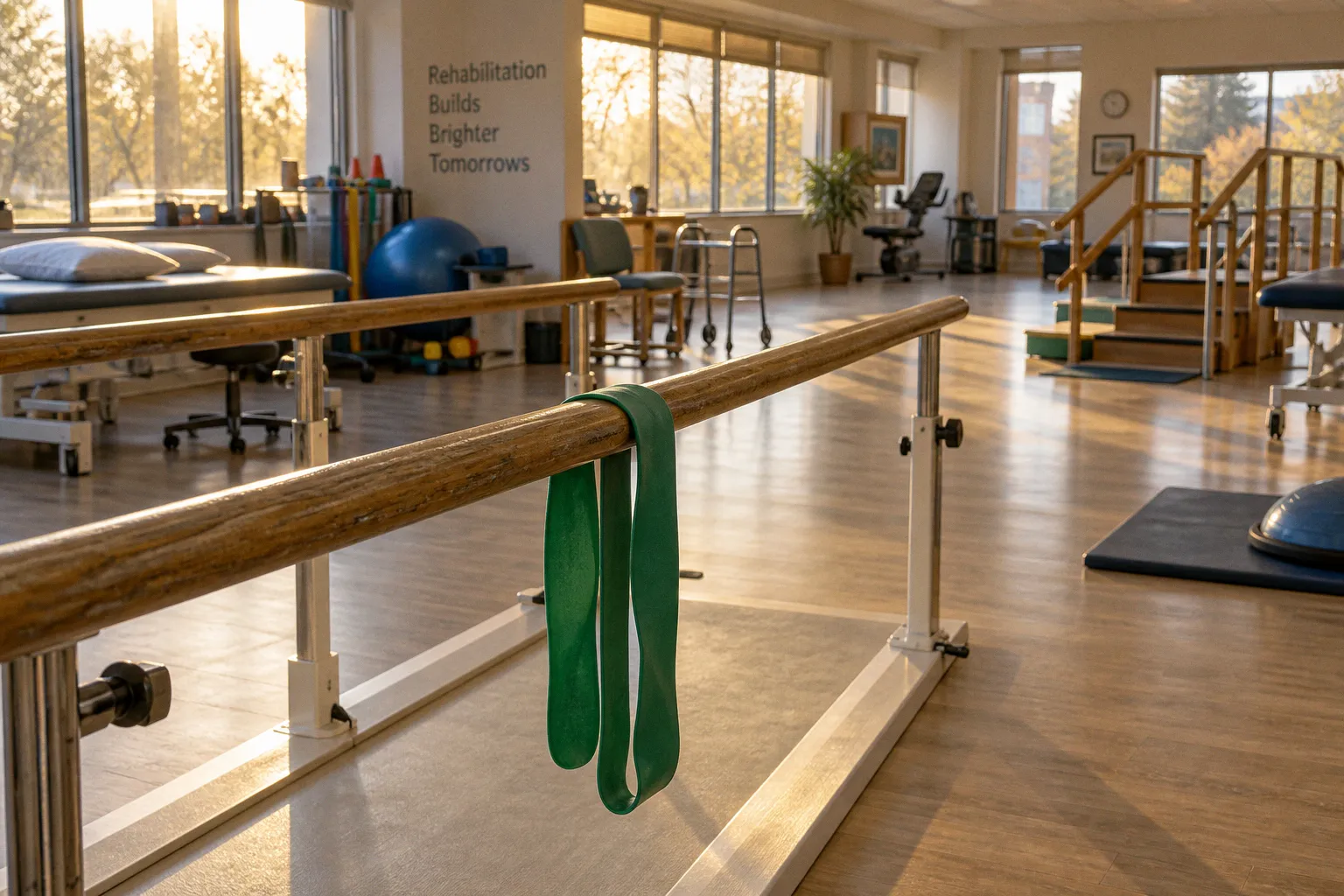
A patient may be medically stable but unable to tolerate prolonged upright activity. Another may complete a 20-minute walking session yet spend the rest of the day too fatigued to transfer safely. A third may receive therapy five days a week but practice almost no meaningful mobility between sessions. In each case, the schedule looks active on paper while gait stability, load-bearing capacity, and ADL independence improve slowly—or not at all.
The right question is not simply, "How many days per week should an older adult attend physical therapy?" The clinically useful question is: How much task-specific rehabilitation can this person perform, recover from, and repeat without compromising safety or participation?
For geriatric physical therapy frequency after stroke, current guidance supports early, needs-based rehabilitation once the patient is medically stable. In intensive inpatient rehabilitation, that may mean up to three hours of combined therapy per day, at least five days per week. In other settings, the appropriate dose may be shorter and distributed across the day. The number alone does not determine the quality of recovery.
The science of timing: why early mobilization matters
Stroke recovery begins with a narrow practical problem: the patient must regain safe movement without being pushed into physiological overload.
Early mobilization typically begins within 24 to 48 hours after stroke onset, provided the patient is medically stable. That does not mean aggressive walking, repeated stair climbing, or high-volume strengthening immediately after the event. It means evaluating bed mobility, sitting balance, transfers, standing tolerance, lower-extremity activation, and basic gait potential early enough to prevent avoidable deconditioning.
The first 24 hours require particular restraint. American Stroke Association guidance indicates that high-dose mobilization within the first 24 hours should not be performed because it can reduce the likelihood of a favorable outcome at three months. Early activity is not automatically better activity. The dose must match the brain's acute recovery phase, cardiovascular stability, blood pressure management, neurological status, and ability to maintain alertness.
I assess early readiness through function, not optimism. Before increasing activity, look for:
- Stable vital signs during position changes and low-level exertion.
- Sufficient alertness to follow simple commands and report symptoms.
- A safe method for airway protection, particularly when dysphagia or impaired cognition is present.
- The ability to maintain sitting or supported standing without rapid loss of postural control.
- A level of motor response that allows therapy to be task-specific rather than purely passive.
- Recovery between efforts without prolonged confusion, marked weakness, or unsafe impulsivity.
The first sessions may be brief. A patient might work on rolling toward the affected side, moving from supine to sitting, aligning the trunk at the edge of the bed, or completing a supported sit-to-stand. These are not lesser forms of rehabilitation. They are the mechanical prerequisites for walking, toileting, dressing, and feeding.
Why the first movement tasks matter
Stroke often disrupts the sequence required for efficient movement. A person may have adequate strength in isolation but fail to shift the center of mass over the feet. They may stand with the knee locked, load the unaffected leg, and rotate the trunk to compensate. They may initiate gait but be unable to control the affected limb during swing or loading response.
That is why I prioritize movement quality and task completion over exercise volume in the acute phase. Repetition matters, but only when the repetition reinforces a usable motor strategy.
A sensible early progression may move through:
1. Bed mobility: rolling, bridging, repositioning, and moving the legs toward the edge of the bed.
2. Trunk control: maintaining midline sitting, reaching within a safe base of support, and recovering from small balance disturbances.
3. Transfers: sit-to-stand, pivot transfers, and controlled lowering into a chair.
4. Supported standing: symmetrical or strategically assisted weight bearing with attention to knee and pelvic control.
5. Short-distance gait: stepping with the safest available device and the minimum assistance required.
6. Functional repetition: practicing the same movement in the context of toileting, dressing, meal access, or room mobility.
Do not treat the clock as the primary target during these stages. Target a functional behavior: fewer hands-on assists, improved loading through the affected leg, more consistent foot clearance, or the ability to complete a transfer without a dangerous collapse.
Early mobilization is a timing decision, not a race. Start promptly when the patient is stable, then increase the dose only when movement remains safe and purposeful.
Decoding the three-hour rule in multidisciplinary care
The three-hour rule is frequently misunderstood by families and, occasionally, by facilities describing their rehabilitation services.
In Medicare Inpatient Rehabilitation Facilities, the rule refers to a minimum of three hours of intensive therapy per day, at least five days per week. Current NICE guidance similarly recommends offering stroke patients at least three hours of needs-based multidisciplinary rehabilitation at least five times per week when they can participate.
That does not mean three uninterrupted hours of physical therapy. The total may include physical therapy, occupational therapy, and speech-language therapy. A patient recovering from stroke may need all three disciplines because walking is only one part of safe independence.
Physical therapy may address gait stability, transfer mechanics, postural control, endurance, and assistive-device use. Occupational therapy may focus on dressing, bathing, upper-extremity function, visual-spatial deficits, and safe task sequencing. Speech-language therapy may address communication, cognition, and swallowing. A patient who walks 50 feet but aspirates thin liquids or cannot manage toileting remains functionally vulnerable.
How the same therapy dose looks across settings
| Rehabilitation setting | Typical frequency framework | What the dose should accomplish |
|---|---|---|
| Acute hospital | Early evaluation and short interventions after medical stabilization | Prevent avoidable immobility, identify impairments, establish a safe transfer and mobility plan |
| Inpatient rehabilitation facility | Up to three hours of combined multidisciplinary therapy per day, at least five days per week | High-volume, coordinated practice aimed at measurable functional gains and discharge planning |
| Skilled nursing rehabilitation | Needs-based therapy adjusted to endurance, cognition, medical complexity, and payer authorization | Improve transfers, gait, ADLs, safety awareness, and carryover into daily routines |
| Long-term care with restorative programming | Repeated functional practice embedded into daily care | Preserve gains, reduce decline, and increase participation in routine mobility |
The setting changes the schedule, but the clinical standard should not change: each session must have a defined functional purpose.
If a patient receives 45 minutes of physical therapy but spends the remainder of the day in bed, the formal therapy may be insufficiently reinforced. If a frail patient is pushed toward a three-hour target and becomes exhausted, inattentive, or unsafe, the schedule may be clinically inappropriate even if it resembles an intensive program.
Standard inpatient best-practice guidance has used at least 45 minutes of each appropriate therapy every day, a minimum of five days per week, as a baseline. That figure is useful, but it is not a universal prescription for every older adult. "Appropriate therapy" matters. The patient must be able to participate in the selected discipline, and the therapy must address an impairment that limits function.
Balancing intensity and endurance in frail seniors
Older adults often arrive in rehabilitation with more than a neurological injury. They may also have sarcopenia, osteoporosis, arthritis, heart failure, chronic lung disease, delirium, malnutrition, orthostatic hypotension, or a recent surgical procedure. These conditions change how much work the patient can tolerate and how quickly the patient recovers.
The best program uses distributed intensity. Instead of treating the schedule as one large block, divide therapeutic work into purposeful bouts. A patient may complete a morning session focused on transfers and standing, an occupational therapy session later for dressing and bathroom sequencing, and a short afternoon walking practice when alertness is better.
Use the patient's response to adjust the next session. Track:
- Number of sit-to-stands completed with safe mechanics.
- Assistance level required for transfers.
- Walking distance and the amount of cueing needed.
- Time tolerated in unsupported or minimally supported standing.
- Frequency of balance losses, knee buckling, or foot drag.
- Recovery time after exertion.
- Ability to follow the movement strategy later in the day.
- Whether fatigue causes deterioration in judgment, posture, or gait pattern.
This is where the intensity of physical therapy after stroke becomes measurable. A patient who walks farther by leaning heavily on a therapist may not have improved functional capacity. A patient who walks a shorter distance with better weight acceptance, improved foot clearance, and fewer cues may be making the more meaningful gain.
Avoiding rehabilitation burnout in elderly patients
Rehabilitation burnout is not simply reluctance. It can reflect excessive dosage, poor sleep, pain, depression, medication effects, infection, dehydration, undernutrition, or an activity plan that does not connect to the patient's daily goals.
Watch for a pattern rather than one tired session. Warning signs include:
- A declining level of participation across consecutive sessions.
- Longer recovery after the same workload.
- New dependence on verbal or physical cues for a previously learned task.
- Worsening gait symmetry or repeated unsafe compensations.
- Sleeping through scheduled therapy or remaining confused afterward.
- Refusal that appears only after a particular activity, such as standing or stair practice.
- Marked fluctuations in blood pressure, heart rate, oxygen saturation, or alertness.
Respond clinically. Shorten the bout, change the task, schedule therapy during the patient's strongest period, manage pain before movement, and coordinate with nursing and medical staff. Do not label every refusal as noncompliance. The patient may be communicating that the dose, timing, or task design is wrong.
At the same time, do not allow fatigue to become an automatic reason for bed rest. Complete inactivity rapidly reduces load-bearing capacity. The solution is usually not "therapy or rest." It is a better ratio of work, recovery, and repeated low-risk practice.
Navigating the critical window for neuroplasticity
The first three to six months after stroke are commonly regarded as a critical window for neuroplastic change and functional recovery. This does not create a deadline after which therapy stops working. It does create a strong argument for organized, frequent practice while the patient is medically able to participate.
Neuroplasticity is not a magic mechanism that rewards random movement. The nervous system adapts to repeated demands. If the patient repeatedly practices unsafe pulling on a walker, excessive trunk leaning, or avoiding the affected limb, those strategies can become more automatic. The rehabilitation plan must therefore combine enough repetitions with precise task selection.
For gait, that may mean practicing:
- Weight shift onto the affected side.
- Controlled loading through the hip and knee.
- Foot clearance during swing.
- Step length without excessive trunk compensation.
- Turning in both directions.
- Starting and stopping.
- Walking over realistic household surfaces.
- Managing a walker or cane without losing postural alignment.
For ADL independence, the same principle applies. Practice should resemble the activity the patient needs to perform after discharge. Bed exercises alone do not prepare a person to get to the bathroom at night. Repeated standing may not transfer to toileting unless the patient also practices clothing management, turning, sitting control, and environmental navigation.
Daily versus intermittent physical therapy
Daily therapy usually offers an advantage when the patient can recover between sessions because it increases opportunities for motor learning and reduces long gaps in practice. It also allows clinicians to identify whether a gain is stable or appears only under ideal conditions.
Intermittent therapy can be appropriate when medical complexity, severe fatigue, limited attention, or transportation and staffing constraints prevent daily formal sessions. But intermittent formal visits should not mean intermittent movement. Nursing staff, restorative aides, caregivers, and the patient should use a consistent mobility plan between therapy sessions.
The strongest programs define what carryover looks like:
- How many staff members are required for a transfer.
- Which side should receive assistance.
- What device and footwear are appropriate.
- Whether the patient should walk to meals.
- How far the patient may walk without seated rest.
- What signs require the activity to stop.
- Which cues produce the safest movement response.
Without this coordination, the patient learns one strategy in therapy and another during routine care. That inconsistency slows recovery and increases fall risk.
If the rehabilitation team needs a broader reference for the relationship between therapy intensity and stroke-related function, NICE guideline NG236 on stroke rehabilitation in adults provides a useful framework for needs-based multidisciplinary care.
Managing rehabilitation in long-term care
Skilled nursing and long-term care facilities face a different operational challenge from inpatient rehabilitation hospitals. Residents may have limited endurance, multiple diagnoses, cognitive impairment, and no single uninterrupted block of time that resembles an intensive rehabilitation schedule.
That does not eliminate the need for measurable goals. It makes measurement more important.
A practical plan should distinguish between:
- Formal physical therapy: evaluation, progression of treatment, gait training, transfer training, balance work, and reassessment.
- Occupational therapy: dressing, bathing, toileting, upper-extremity use, cognition, and environmental problem-solving.
- Speech-language therapy: dysphagia management, communication, and cognitive-linguistic function.
- Restorative nursing: repeated daily practice that maintains and reinforces established mobility skills.
- Routine care: opportunities to walk, stand, reposition, reach, and participate rather than remaining passively transported.
Do not count every position change as equivalent to rehabilitation. A passive transfer performed entirely by staff may preserve safety but does not train the patient's motor control. Conversely, a short, supervised walk to the dining room may have greater functional value than an additional set of isolated leg exercises if the patient's main discharge barrier is household ambulation.
Milestones that indicate discharge readiness
Discharge readiness should be tied to the patient's actual functional capacity in the environment they are returning to, not to a fixed length of stay or a target number of therapy visits. A patient going home with a spouse has different requirements than a patient returning to assisted living or remaining in a long-term care neighborhood.
Functional milestones that consistently matter across settings:
- Sit-to-stand from a standard chair with no more than supervision, even if a verbal cue is still required.
- Safe bed mobility and the ability to reposition during the night without help that exceeds what is available at home.
- A consistent transfer strategy understood by the patient and every caregiver who will assist.
- Household or facility ambulation at a stable pace with an appropriate device and minimal cues.
- Tolerance of upright activity long enough to participate in meals, grooming, and basic self-care.
- Reliable medication routines and the ability to ask for help when confused.
- Safe swallowing, documented by clinical evaluation.
- Awareness of personal fall risk and willingness to use the call system rather than attempting an unsafe transfer alone.
- Caregiver training completed for any task the patient cannot perform independently.
When these milestones are still developing, discharge usually should wait. A premature return to the previous setting often brings the patient back to the hospital within weeks, with much of the rehabilitation gain lost to a single fall, aspiration event, or pressure injury.
Caregiver and nursing carryover
Even an excellent therapist cannot maintain recovery without a coordinated carryover plan. The patient who practices safe sit-to-stand in the therapy gym and is then lifted by nursing staff during routine care is not getting the benefit of that practice.
A clear carryover plan defines how many staff members are required for each transfer, which side they should approach from, what device and footwear the patient should use during routine mobility, how far the patient is expected to walk for meals and bathroom use, what signs require the activity to stop, which verbal cues produce the safest response, when the patient should rest, and what the patient is allowed to do alone without calling for help.
Without this coordination, the patient learns one strategy in therapy and another during routine care. That inconsistency slows recovery, increases fall risk, and erodes the confidence of both the patient and the staff.
Recovery in long-term care does not end when formal therapy hours end. It continues every time the patient stands, transfers, walks to a meal, or practices a task with a caregiver who has been taught the right way to help.
Matching dose to patient, not to schedule
The optimal therapy sessions per week for seniors after stroke do not resolve to a single number. The patient who can tolerate three hours of multidisciplinary therapy per day, five days a week, in an inpatient rehabilitation facility benefits from that intensity when participation is real and the tasks are specific. The patient in a skilled nursing facility may benefit more from shorter, distributed bouts matched to endurance, with deliberate carryover into routine care. The patient returning home with family support may need a tapered schedule that emphasizes practice in the actual environment, not the gym.
What does not change is the underlying logic. Match the dose to the patient. Select tasks that resemble the life the patient is returning to. Monitor response rather than assume it. Adjust the schedule before it breaks the patient.
Early mobilization must be early enough to prevent deconditioning but restrained enough to avoid harm in the first 24 hours. The three-hour target is a useful standard for intensive settings and a poor one for frail patients who cannot tolerate it. Neuroplasticity rewards specific, repeated practice more than it rewards a high count of sessions. Long-term care carries the responsibility of turning short therapy windows into continuous functional opportunity.
When frequency, intensity, and task design align with what the patient can actually perform, recover from, and repeat, the schedule begins to make sense. That alignment is the difference between therapy that fills the calendar and rehabilitation that changes the outcome.
FAQ
How often should an older adult receive physical therapy after a stroke?
When should physical therapy begin after a stroke?
What does the three-hour rehabilitation rule mean after a stroke?
Should stroke rehabilitation be done every day?
How can caregivers support stroke recovery between therapy sessions?
Related articles
 Rehabilitation & RecoveryMobility aids for seniors: top recovery tools after surgery
 Rehabilitation & RecoveryWeighted Utensils for Tremors: Testing Three Designs
 Long-Term CareFall prevention protocols: three clinical approaches compared
 Long-Term CarePressure ulcer prevention tools for skilled nursing facilities