Pressure ulcer prevention tools for skilled nursing facilities
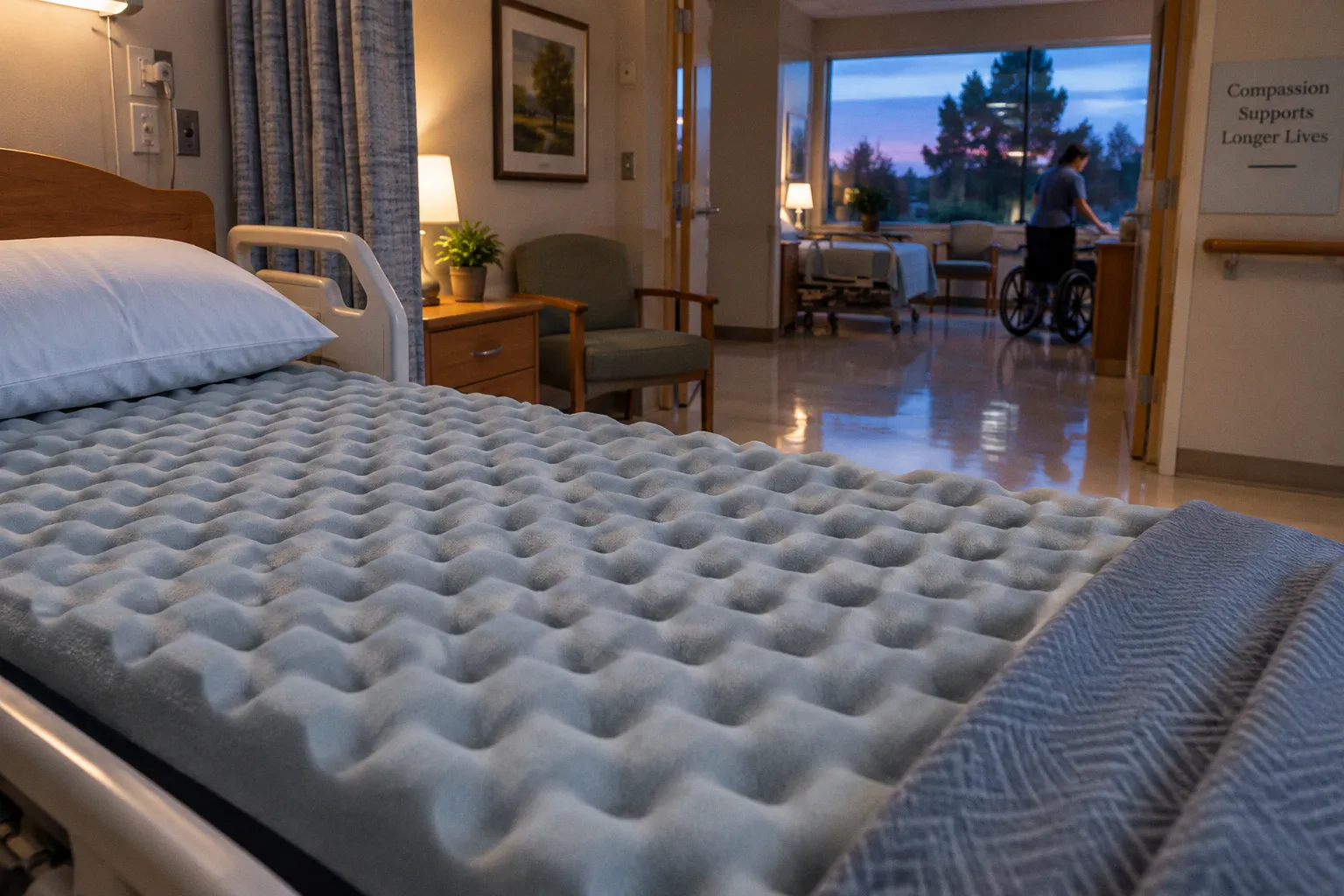
It evaluates whether the facility identified risk, implemented an individualized plan, delivered the plan consistently, and revised it when the resident’s condition changed.
That distinction defines the operational problem. Pressure ulcer prevention equipment for nursing homes is not a standalone purchase category. It is part of a compliance system that includes risk stratification, repositioning, nutrition management, moisture control, documentation, staff execution, and equipment maintenance. A powered mattress cannot compensate for a failed workflow. A completed assessment cannot compensate for an unusable surface.
The financial exposure is also broader than the price of a mattress. A preventable pressure injury can trigger additional treatment, longer stays, higher acuity levels, reimbursement complications, survey scrutiny, and deficiency citations. Facilities that treat support surfaces as durable goods rather than clinical infrastructure usually discover the error during a chart review or a physical inspection.
Navigating CMS F686: the standard is prevention, not possession
Federal regulation F686, under 42 CFR §483.25(b), requires a skilled nursing facility to ensure that residents do not develop pressure ulcers unless they are clinically unavoidable. Where a pressure ulcer is present, the facility must provide treatment and services consistent with professional standards of practice to promote healing, prevent infection, and prevent additional ulcers.
The language creates two separate operational obligations:
1. Prevent avoidable pressure injuries.
2. Manage existing injuries with a clinically appropriate plan.
A facility can satisfy neither obligation through a generic mattress allocation policy. The resident’s condition determines the intervention. A bedfast resident with poor nutrition, incontinence, impaired sensation, and limited ability to reposition independently presents a materially different risk profile from a mobile resident recovering after surgery.
Survey review commonly follows the chain of cause and effect:
- Was the resident assessed on admission?
- Was the assessment repeated after a significant change?
- Did the care plan reflect the documented risks?
- Was the selected support surface appropriate for those risks?
- Were repositioning and off-loading interventions actually performed?
- Did staff inspect the skin and report changes?
- Was the equipment intact, clean, and functioning?
- Did the facility respond when the intervention failed?
A missing assessment is a documentation defect. A mismatch between the assessment and the care plan is a clinical control defect. A torn mattress or collapsed foam surface is an equipment-management defect. F686 exposure can result from any of the three.
The practical standard is therefore not whether the facility can produce a policy. It is whether the policy survives contact with the nursing workflow.
F686 compliance is an execution test. Equipment is only one component of the evidence.
What surveyors can see quickly
Pressure injury prevention systems leave physical and documentary traces. A facility with weak controls often shows the same pattern across departments:
- Braden scores copied forward without corresponding care-plan changes.
- Repositioning schedules documented uniformly despite different acuity levels.
- Support surfaces assigned by room or bed type instead of resident risk.
- Mattresses with visible compression, exposed seams, staining, or air loss.
- Skin assessments completed after the fact rather than during routine care.
- Staff unable to explain why a resident received a specific mattress.
- Wound documentation that lists treatment products but not the cause of continued pressure.
- No clear replacement threshold for damaged or clinically ineffective equipment.
The issue is not paperwork volume. It is whether the record demonstrates clinical reasoning. A short, specific care plan is stronger than a long template that fails to explain why an intervention was selected.
Risk stratification: making the Braden Scale part of the workflow
The Braden Scale remains one of the most widely used structured risk assessment tools in long-term care. It evaluates six domains:
- sensory perception;
- moisture;
- activity;
- mobility;
- nutrition;
- friction and shear.
The total score ranges from 6 to 23. A score of 18 or lower indicates that the resident is at risk. A score of 12 or lower is commonly treated as high risk.
The number is useful only if it changes what staff do. A Braden score that appears in the electronic record but does not affect repositioning, surface selection, continence care, nutrition intervention, or skin surveillance is administrative decoration.
The assessment should be integrated at defined transition points. NPIAP guidance recommends structured risk assessments weekly during the first four weeks after admission, then quarterly and whenever the resident’s condition changes. That schedule matters because pressure injury risk is dynamic. A resident can move from moderate to high risk after an infection, fracture, stroke, dehydration episode, medication change, decline in oral intake, or loss of mobility.
Turning score domains into interventions
Each Braden domain points toward a different operational response.
Sensory perception. Residents with impaired sensation may not report discomfort or reposition themselves in response to pressure. Nursing staff must rely more heavily on scheduled observation, skin inspection, and assisted repositioning.
Moisture. Incontinence, perspiration, wound drainage, and poor microclimate control increase the risk of moisture-associated skin damage. The response may include more frequent cleansing, barrier products, breathable linens, and a review of whether the mattress cover is retaining heat or moisture.
Activity. A bedfast resident has a fundamentally different loading pattern from a resident who walks to meals. Activity status should influence the surface, transfer plan, chair cushion, and frequency of off-loading.
Mobility. A resident who can move but cannot change position independently may need a structured turning schedule and staff assistance. The distinction between limited mobility and complete immobility should be reflected in the care plan.
Nutrition. Low intake and poor nutritional status impair tissue tolerance and healing. Support surfaces do not address the underlying deficit. Nutrition screening, dietitian involvement, hydration monitoring, and escalation for declining intake remain separate controls.
Friction and shear. Dragging a resident across a bed can damage tissue even when the mattress is technically appropriate. Transfer technique, lift equipment, positioning aids, and staff competency are part of pressure injury prevention equipment for nursing homes, but they must be used correctly.
A strong workflow links the score to an intervention matrix. The matrix does not need to prescribe one mattress for every score. It should identify the clinical factors that require escalation, such as immobility combined with incontinence, an existing pressure injury, repeated skin changes, inability to tolerate repositioning, or failure of a lower-level surface.
The two-hour schedule is not a substitute for assessment
For bedfast residents, repositioning at least every two hours is a commonly used baseline in long-term care. It is not a universal mechanical rule that overrides clinical judgment. Some residents require more frequent repositioning. Others may have clinical limitations that require a modified schedule, positioning technique, or specialist review.
Powered alternating-pressure or low-air-loss systems do not eliminate manual repositioning. They redistribute or reduce pressure exposure; they do not remove the need for skin inspection, positioning, transfer safety, and individualized nursing judgment. A facility that treats an advanced mattress as permission to stop turning residents has converted a mitigation tool into a compliance liability.
The record should show not only that repositioning occurred, but that the resident tolerated the position, that skin was assessed, and that staff adjusted the plan when the intervention was ineffective.
Categorizing support surfaces: from Group 1 to Group 3
CMS classifies pressure-reducing support surfaces into three DME billing groups. The categories are useful for procurement and reimbursement controls, but they should not be mistaken for a clinical ranking in which Group 3 is automatically better than Group 1.
The appropriate surface depends on the resident’s condition, the care plan, the existing injury, mobility, moisture exposure, weight, tolerance, and the facility’s ability to operate and maintain the equipment.
| Support surface group | Typical equipment | Operational use | Main control issue |
|---|---|---|---|
| Group 1 | Pads, overlays, and standard foam, air, gel, or water surfaces | Baseline pressure redistribution for residents with lower or moderate risk, when paired with routine repositioning | Correct sizing, compatibility, and replacement of compressed or damaged materials |
| Group 2 | Powered air flotation, low-air-loss, and alternating-pressure mattresses | Higher-risk residents or residents requiring more advanced pressure redistribution and microclimate management | Clinical documentation, setup, staff training, maintenance, and prior authorization |
| Group 3 | Air-fluidized beds circulating silicone beads | Highly specialized support for severe or complex pressure injury management | Specialist oversight, medical necessity documentation, high operating cost, and availability |
Group 1: low complexity does not mean low accountability
Group 1 surfaces are common because they are comparatively simple to deploy. Foam overlays, air systems, and gel-based products can reduce pressure when they are matched to the bed frame, resident weight, and clinical needs.
Their weakness is often not the underlying design. It is overuse beyond the effective life of the product. Foam compresses. Covers tear. Air cells lose pressure. Overlays shift. A facility may continue to label a surface as operational because it remains in the equipment inventory, even though it no longer distributes weight appropriately.
Group 1 products also require correct installation. A poorly fitted overlay can create folds, gaps, or unstable transfer conditions. A cover that traps moisture can create a new skin-management problem while the equipment is being used to solve another one.
Group 2: advanced technology with a documentation burden
Group 2 surfaces include powered air flotation, low-air-loss systems, and alternating-pressure mattresses. These products can support residents with higher acuity levels, greater immobility, moisture exposure, or existing pressure injuries. They may reduce interface pressure and improve microclimate control, depending on the system and its configuration.
They also create more operational failure points:
- the pump must remain connected and functional;
- pressure settings must match the resident and the manufacturer’s instructions;
- tubing must not be kinked or disconnected;
- the mattress must be compatible with the bed frame;
- staff must know alarm states and basic troubleshooting;
- the resident must still receive manual assessment and repositioning;
- the rationale for use must be documented.
The best pressure relief mattresses for long term care are therefore not selected by marketing labels. They are selected by clinical fit and operating reliability. A technically advanced mattress that alarms overnight, lacks replacement parts, or is used incorrectly may provide less practical protection than a simpler surface that staff understand and maintain.
Group 3: a specialist intervention, not a premium upgrade
Group 3 air-fluidized beds circulate silicone beads to create a fluidized support environment. They are designed for highly complex cases and require a much more controlled clinical and operational process.
The cost issue is obvious, but cost is not the only constraint. These beds can affect transfers, mobility, room configuration, infection-control procedures, linen management, and staffing. They require clear medical necessity, documented clinical oversight, and a plan for evaluating whether the resident continues to need the intervention.
A facility should not escalate to Group 3 merely because a resident has a pressure injury. The relevant question is whether the resident’s condition, treatment plan, and failure of less intensive interventions justify the increased complexity.
The hidden crisis: equipment integrity and replacement cycles
A 2019 Medline assessment of more than 33,000 nursing home support surfaces across 485 facilities found that over half required immediate replacement because of tears, holes, staining, or evident compression. The finding is operationally significant because it challenges a basic assumption in long-term care: that a mattress listed in an inventory is a usable clinical asset.
A damaged surface can create several risks at once:
- reduced pressure redistribution;
- increased friction or shear;
- fluid penetration and infection-control concerns;
- inaccurate performance of powered systems;
- patient discomfort and instability;
- survey findings tied to equipment condition;
- unplanned replacement costs when failure becomes urgent.
The most expensive equipment-control failure is often delayed recognition. Planned replacement can be budgeted. Emergency replacement can interrupt bed availability, delay admissions, force temporary equipment rentals, and create a documentation gap while staff improvise.
A workable inspection program
An effective inspection cycle has three layers.
At point of use. Nursing staff should identify visible damage, loss of firmness, abnormal noise, air leakage, wetness, and cover failure during routine care. This is the earliest detection point.
During scheduled equipment rounds. Nursing leadership, central supply, or clinical engineering should inspect surfaces systematically. The process should include seams, zippers, pump function, hoses, alarms, frame compatibility, and cleaning status.
At replacement review. The facility should establish documented thresholds for removal from service. Those thresholds should address structural damage, persistent staining, compression, repeated repair, failure to hold pressure, and inability to clean the surface according to infection-control requirements.
A replacement log should capture the asset identifier, room or unit, inspection date, defect, action taken, and return-to-service decision. The purpose is not bureaucratic accumulation. It is traceability. When a resident develops a pressure injury, the facility must be able to establish what equipment was in use and whether it was functioning.
A mattress that has passed procurement is not necessarily a mattress that has passed clinical inspection.
Cleaning and infection-control constraints
Pressure-reducing equipment often contains seams, valves, pumps, tubing, covers, and internal structures that require product-specific cleaning procedures. Aggressive disinfectants can damage materials. Inadequate cleaning can create a contamination risk. The infection-control team should align the equipment policy with manufacturer instructions and the facility’s environmental cleaning program.
This is especially important when surfaces move between residents. A facility that lacks a defined decontamination and inspection process may create a gap between wound-care policy and infection-control practice.
Prior authorization and reimbursement controls for Group 2 equipment
Since October 21, 2019, CMS has enforced prior authorization requirements for Medicare coverage of certain Group 2 pressure-reducing support surfaces. The relevant HCPCS codes include E0193, E0277, E0371, E0372, and E0373.
This turns equipment selection into a reimbursement-control issue. The clinical team may identify a need, but coverage depends on documentation, medical necessity, and the applicable billing requirements. Group 2 or Group 3 equipment should not be treated as automatically billable because the resident has an elevated Braden score or an existing wound.
The documentation package should connect the clinical facts to the requested equipment:
- the resident’s diagnosis and current skin condition;
- relevant Braden domains and score;
- mobility and activity limitations;
- prior or current pressure injuries;
- repositioning and off-loading measures already attempted;
- nutritional and moisture-related risk factors;
- the medical reason a lower-level surface is insufficient;
- physician documentation and required face-to-face elements;
- the intended duration and reassessment plan.
A high-risk score may support escalation, but it does not independently prove that a specific HCPCS-coded surface meets coverage requirements. Clinical judgment and billing documentation operate together.
The facility’s financial team should also track authorization status, rental versus purchase terms, supplier responsibilities, repair response times, and the date the equipment is no longer medically necessary. Continuing a rental after the clinical indication has ended is a financial control failure. Failing to renew or update documentation while the resident still needs the equipment is a continuity failure.
Procurement should evaluate the full operating cost
The purchase price is only one line in the cost model. A more complete comparison includes:
- acquisition or rental cost;
- service and repair coverage;
- replacement pump and tubing availability;
- staff training time;
- cleaning requirements;
- storage and transport;
- electricity and alarm management;
- compatibility with existing beds;
- downtime and backup equipment;
- authorization and documentation workload.
A lower-cost system may be preferable if it has reliable local service and clear staff procedures. A higher-cost system may be justified when it addresses a defined clinical problem and reduces the risk of continued injury. Neither conclusion can be made from the product category alone.
Building a defensible prevention system
The strongest facilities connect clinical standards for wound care in SNFs with operational controls. The process should be visible across admission, daily care, change-in-condition review, equipment management, and discharge or transfer.
A practical operating model includes the following sequence:
1. Assess on admission. Record the Braden domains, mobility status, moisture exposure, nutrition concerns, skin findings, and ability to reposition independently.
2. Assign interventions by risk. Select the support surface, positioning aids, chair cushion, moisture controls, nutrition actions, and observation frequency.
3. Document execution. Record repositioning, skin inspection, continence care, meal and hydration concerns, and resident tolerance.
4. Escalate after change. Repeat the risk assessment after acute illness, reduced intake, surgery, new immobility, skin deterioration, or other material changes.
5. Inspect equipment. Confirm that the mattress, overlay, pump, cover, and accessories are intact and functioning.
6. Review effectiveness. If skin condition worsens or the resident cannot tolerate the plan, revise the intervention rather than simply repeating the same documentation.
7. Close the reimbursement loop. Maintain the medical necessity, authorization, supplier, and discontinuation records for advanced equipment.
This sequence also supports post-acute care transitions. When a resident moves from a hospital to a skilled nursing facility, pressure injury information can be lost between medication reconciliation, therapy orders, nursing handoff, and equipment delivery. The receiving facility needs the wound status, prior interventions, support-surface requirements, repositioning limitations, and nutritional concerns before the resident arrives or immediately at admission.
The same issue appears at discharge. A resident transferring home or to another facility may leave with a wound-care plan but without the equipment, training, or supplier coordination required to execute it. A clinically correct plan that cannot be delivered at the next setting is an incomplete transition.
Bottom-line assessment
Pressure injury mitigation tools for geriatric care are most effective when they operate inside a controlled system. The Braden Scale provides structured risk stratification. Support surfaces reduce pressure exposure. Positioning aids and lift equipment reduce friction and shear. Moisture and nutrition interventions address additional drivers. Documentation connects the pieces to F686.
The principal risk is not that a facility lacks the most advanced mattress. It is that the facility cannot demonstrate why the selected equipment was appropriate, whether it functioned, whether staff used it correctly, and whether the care plan changed when the resident’s condition changed.
Group 1 surfaces may be sufficient for some residents. Group 2 systems can be appropriate for higher-risk cases but carry prior authorization and maintenance requirements. Group 3 beds are specialized interventions with substantial operational and reimbursement implications. None replaces clinical nursing judgment or manual repositioning.
The bottom line is direct: pressure ulcer prevention equipment for nursing homes should be managed as regulated clinical infrastructure, not as a one-time purchasing decision. Facilities that control the assessment-to-equipment-to-documentation chain reduce both resident risk and exposure to avoidable F686 deficiencies. Facilities that control only the inventory will eventually discover that ownership is not evidence of compliance.
FAQ
What does CMS F686 require skilled nursing facilities to do?
How often should the Braden risk assessment be completed?
Is repositioning every two hours required for every bedfast resident?
Do alternating-pressure or low-air-loss mattresses eliminate the need for manual repositioning?
What should a facility check when inspecting a pressure-relieving mattress?
Does a high Braden score automatically justify Group 2 or Group 3 equipment coverage?
Related articles
 Long-Term CareFall prevention protocols: three clinical approaches compared
 Long-Term CareInfection Control Audits: What Our 30-Day SNF Review Revealed
 Memory & Cognitive CareDementia care facility transitions: common pitfalls to avoid
 Monroe Community Hospital Launches Friendship Place for Specialized Memory Care