Fall prevention protocols: three clinical approaches compared
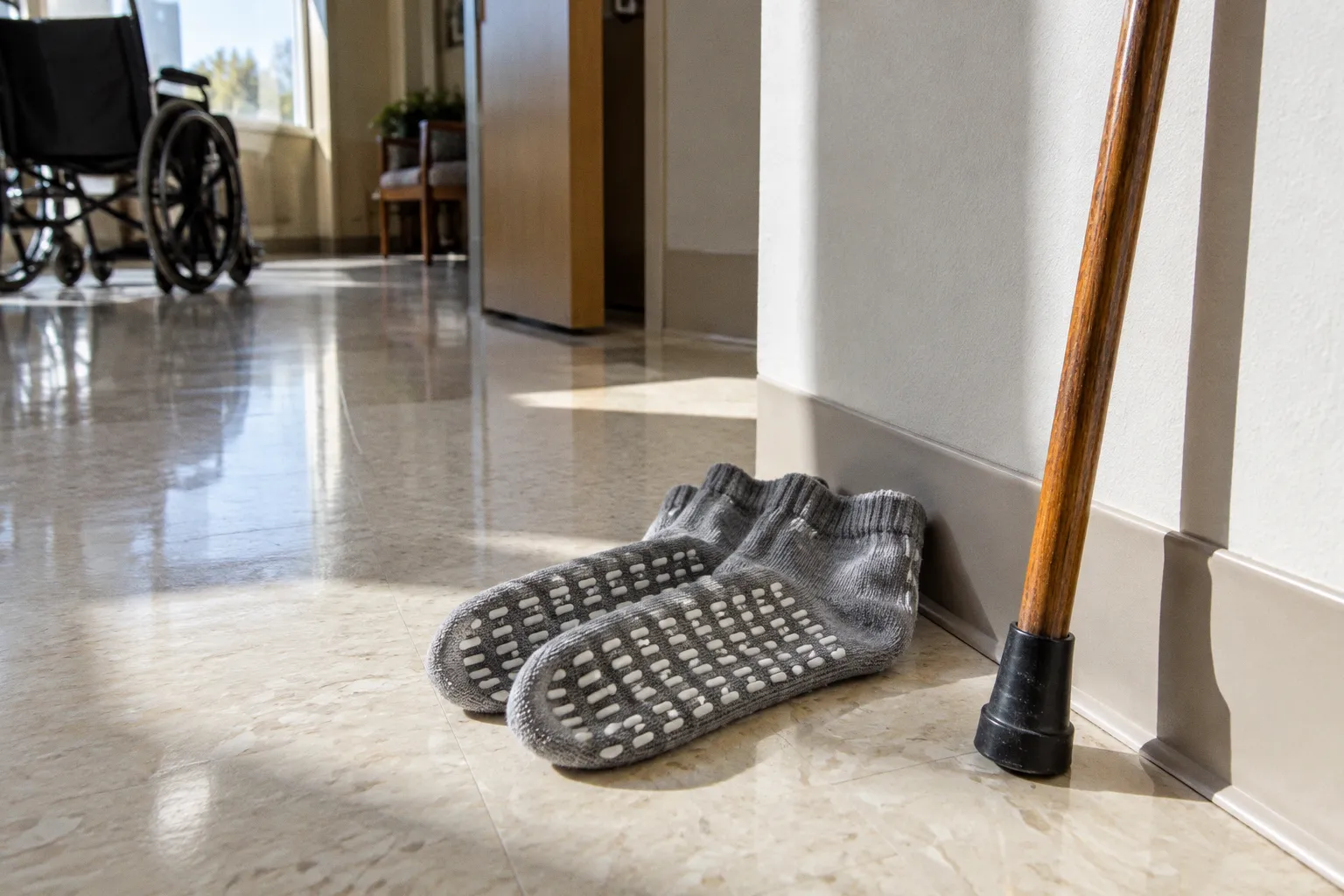
That estimate describes the hospital-care impact of an injurious fall; it should not be treated as an established, facility-specific cost for skilled nursing facilities. In long-term care, the financial exposure also includes emergency transfers, post-acute treatment, staff time, regulatory scrutiny, and the operational disruption that follows a pattern of adverse events.
The Joint Commission’s National Patient Safety Goal NPSG 09.02.01 designates fall reduction as a patient-safety priority in applicable accredited settings. Yet many long-term care operators still treat fall prevention as a checklist exercise rather than a layered clinical system. The gap between policy and performance is where the avoidable harm — and much of the operational cost — accumulates.
Three clinical approaches dominate the field: standardized risk assessment scales, multifactorial prevention bundles, and post-fall root-cause analysis. Each has measurable strengths, predictable blind spots, and implementation costs that rarely appear in a compliance manual. The comparison matters because these approaches are not interchangeable. A risk score can identify a concern. A prevention bundle can change daily care. A post-fall huddle can reveal why the first two layers failed in a particular case.
Standardized Risk Assessment: Morse, Hendrich II, and STRATIFY
Every fall prevention program starts with screening, but screening is only the first clinical decision. Three instruments remain especially familiar to nurses and quality teams.
The Morse Fall Scale, published in 1989 by Janice Morse and colleagues, is widely used in North American facilities. It assesses six factors: history of falling, secondary diagnosis, ambulatory aid, IV or heparin lock, gait, and mental status. Scores range from 0 to 125. A score of 25 or above is commonly used to indicate moderate risk, while 45 or above indicates high risk.
Its appeal is operational. The assessment is quick, requires limited training, and can be embedded in an electronic health record. It gives staff a common vocabulary during admission and change-in-condition reviews. It also produces a number that can be audited, trended, and linked to a care-plan workflow.
The problem is that numerical clarity can create false confidence. A score looks precise even when the underlying prediction is weak for the population in front of the clinician. A long-term care resident may have fluctuating cognition, impaired judgment, orthostatic symptoms, continence-related urgency, medication effects, and variable mobility. Those risks do not necessarily appear with equal weight in a short screening instrument.
The Hendrich II Fall Risk Model, published in 2003 by Ann Hendrich and colleagues, takes a different approach. It evaluates factors including confusion, depression, altered elimination, dizziness, and gender, together with the Get-Up-and-Go functional test. Comparative evaluations in acute and tertiary care settings have found Hendrich II to perform better than the Morse Fall Scale on measures such as sensitivity and predictive accuracy in those settings.
That finding is useful, but its scope matters. Better performance in acute or tertiary care does not automatically establish superior performance in a nursing home. A tool’s predictive value depends on the population in which it is used, the frequency of reassessment, the quality of the data entered, and what staff do with the result.
The STRATIFY tool, developed in 1997 by Oliver and colleagues at St Thomas’ Hospital, uses five items and commonly flags risk at a score of 2 or above. It was developed and validated primarily in hospital wards and remains familiar in systems influenced by United Kingdom clinical practice.
The central limitation is shared by all three instruments: their principal validation history is rooted in acute-care environments, not in the chronic, multimorbid population of long-term care. Nursing home residents often live with baseline gait impairment, cognitive decline, multiple diagnoses, and long medication lists. If a tool labels most of the census as high risk, the designation loses its ability to distinguish who needs a change in supervision, mobility support, medication review, or environmental intervention today.
Research in nursing home settings has shown that the Morse Fall Scale can over-classify residents as high risk. In one reported cohort, as many as 75% of residents were identified as high risk while only 12.5% experienced a fall during the observation period. The implication is not that the instrument is useless. It is that the result must be interpreted as a prompt for clinical review, not as a stand-alone prediction.
| Parameter | Morse Fall Scale | Hendrich II | STRATIFY |
|---|---|---|---|
| Core structure | Six scored risk factors | Multiple risk factors plus a functional test | Five scored risk factors |
| Common scoring format | 0–125 | Composite score | 0–5 |
| Common high-risk threshold | 45 or above | Composite cutoff defined by the model or facility protocol | 2 or above |
| Primary validation context | Acute care | Acute and tertiary care evaluations | Hospital wards |
| Long-term care limitation | May classify a large share of residents as high risk | Comparative strength in acute care does not establish equivalent LTC performance | Limited long-term care-specific validation |
| Practical value | Fast baseline screen | Adds functional and cognitive elements | Simple, quick ward-based screen |
The operational question is therefore not which scale produces the highest number of high-risk residents. It is whether the assessment changes care. A useful screening process should lead to a timely review of mobility, cognition, continence, medication exposure, footwear, vision, environment, and supervision needs. If the number is recorded and no part of the care plan changes, the facility has completed documentation rather than prevention.
Static risk scores capture a snapshot. They do not capture the trajectory of a resident whose cognition, medication regimen, strength, or mobility changes from week to week. Reassessment after a fall, acute illness, medication change, or noticeable decline is more clinically meaningful than treating an admission score as a permanent label.
Screening tools flag risk. They do not reduce falls. The distinction matters when a facility measures documentation more reliably than it measures whether care actually changed.
The Shift Toward Multifactorial Prevention Bundles and Hourly Rounding
The field has moved away from relying on a single screening instrument and toward bundled, multidisciplinary interventions. The Registered Nurses’ Association of Ontario’s 4th edition guideline update in 2017 reflects that direction, recommending an integrated approach that combines individualized assessment with environmental modifications, medication review, education, and other targeted interventions.
The logic is straightforward. Falls rarely have one cause that can be removed with one order. A resident may stand without assistance because of urgency, become dizzy after a medication change, misjudge the distance to the bathroom, and encounter a call light placed beyond reach. Each factor is manageable in isolation. Together, they create a predictable event.
A structured quality improvement project in a 90-bed skilled nursing facility illustrates how a bundle works operationally. The intervention paired purposeful hourly rounding with formal staff education. Rounding addressed pain, positioning, toileting, and the location of personal items. Staff education focused on recognizing fall risks and responding to them consistently. Staff knowledge test scores increased from 40.77% to 78.08% with statistical significance, and the facility subsequently recorded a reduction in fall incidence.
The result should not be read as proof that hourly rounding alone prevents falls in every nursing facility. It demonstrates the mechanism of a bundle: a routine intervention creates repeated opportunities to identify unmet needs, while staff education improves the likelihood that those needs will be recognized and acted on.
The components themselves are not novel. Their value lies in integration and reliability.
1. Purposeful hourly rounding — Structured bedside checks address toileting, pain, hydration, positioning, and environmental hazards. Documentation should do more than prove that a room was visited; it should identify unmet needs and trigger escalation when a pattern emerges.
2. Medication review and deprescribing — Sedatives, antihypertensives, diuretics, and psychoactive medications can contribute to dizziness, orthostasis, sedation, urgency, or impaired judgment. Review should focus on the resident’s current symptoms and function, with prescriber-led adjustment where appropriate rather than automatic discontinuation.
3. Physical therapy integration — Mobility and balance work should be connected to the daily care plan. A referral made after a fall is reactive. Ongoing attention to transfers, gait, strength, assistive-device use, and safe participation in activity is preventive.
4. Environmental standardization — Bed height, lighting, clutter, grab-bar placement, floor condition, footwear, and call-light access should be assessed in relation to the individual resident. A standardized room setup is useful only when it remains compatible with the resident’s reach, vision, mobility, and habits.
5. Staff education with competency verification — A single in-service rarely changes practice for long. Education is more durable when staff demonstrate how to respond to a high-risk transfer, recognize a change in gait, use an assistive device, and escalate a medication or cognition concern.
6. Communication across disciplines and shifts — The intervention cannot depend on one nurse remembering one resident’s risk. The relevant precautions need to follow the resident through handoff, therapy, dining, activities, toileting, and overnight care.
Hourly rounding is often described as a scheduling intervention, but its real effect is relational and clinical. It reduces the interval in which a resident’s need remains invisible. The resident who tries to transfer alone may not be “noncompliant” in any meaningful clinical sense; the resident may have waited, forgotten the call process, or believed the need was urgent. Rounding can expose that pattern before it becomes an incident.
The operational cost is real. A bundle requires scheduling adjustments, cross-disciplinary coordination, supply management, education time, and sustained oversight. Facilities with staffing constraints face a resource-allocation problem that no guideline can solve by wording alone. Rounding that exists only on paper, or that is compressed into a hurried documentation exercise, will not deliver the same intervention as a clinically meaningful check.
The financial comparison also requires precision. A roughly $30,000 estimate is commonly associated with the additional direct care cost of an injurious fall in hospital settings. It is not a validated universal price tag for an injurious fall in a skilled nursing facility. Long-term care operators should instead track their own costs: emergency transfers, imaging, hospitalization, treatment, additional supervision, rehabilitation, staff time, and the downstream effect of a serious injury on the resident’s function and plan of care.
Post-Fall Clinical Huddles and Root-Cause Analysis Integration
The third approach does not attempt to prevent the first fall. It focuses on preventing recurrence.
A post-fall protocol in long-term care commonly begins with immediate clinical assessment: injury evaluation, neurological monitoring when indicated, vital signs, medication review, and communication with the responsible clinician and family according to facility policy. Repeating the same risk screen may be necessary for documentation, but it rarely explains what happened. The more operationally valuable step is the post-fall huddle.
A huddle is a time-bound, multidisciplinary review of the specific circumstances surrounding the event. It asks what the resident was attempting to do, what support was available, what changed recently, and whether the existing plan was realistic. Root-cause analysis in this setting is not an abstract exercise in assigning blame. It is a disciplined effort to reconstruct the conditions at the moment of the fall.
Relevant variables may include:
- time of day and location;
- staffing pattern and immediate workload;
- whether the resident was attempting toileting, transfer, or ambulation;
- footwear and assistive-device availability;
- medication timing and recent medication changes;
- pain, dizziness, weakness, or acute illness;
- call-light position and whether the resident knew how to use it;
- lighting, clutter, flooring, and bed height;
- whether the event was witnessed;
- what the care plan required and what care was actually available.
The output should not be another unchanged risk score. It should be a modified care plan with assigned responsibility. If the resident fell while trying to toilet after repeated delays, the response may involve a different rounding schedule, prompted toileting, commode placement, staffing communication, or medication review. If the resident fell during a transfer, the intervention may involve reassessing the transfer method, equipment, footwear, strength, and staff competency. The right response comes from the circumstances, not from the score alone.
Effective post-fall systems share several operational features:
1. Prompt huddle initiation — The review should occur while the event is still clear to the involved staff. A facility may set a local time target, but speed should support clinical care rather than turn the huddle into a race to complete a form.
2. Standardized incident documentation — Documentation should capture injury status and required clinical checks, but also the situational variables that screening tools miss.
3. Care-plan modification with accountability — Each change should have an owner, a start point, and a method for determining whether it worked. “Increase monitoring” is weaker than specifying who will monitor, during which activity, and what escalation is required.
4. Resident and family perspective — The resident may explain a trigger that staff did not observe: urgency, fear of bothering staff, an uncomfortable device, poor sleep, or a desire to maintain independence. That information can change the intervention.
5. Aggregate trend review — Monthly or quarterly analysis by unit, time of day, activity, staffing pattern, and resident characteristics can reveal recurring system problems that no individual huddle can identify.
6. Reassessment after the intervention — If the resident continues attempting the same unsafe transfer, the facility has evidence that the revised plan is not working. The response should be another clinical review, not a repetition of the same warning.
The analytical value of this approach is that it operates at the individual-resident level. A Morse score of 55 does not tell the team that a resident fell at night while attempting unassisted toileting because the call light was out of reach. A post-fall huddle can.
Post-fall analysis treats every incident as a data point in a facility-specific pattern. The operational objective is recurrence prevention, not incident documentation for the compliance file.
Balancing Predictive Accuracy with Personalized Clinical Judgment
The central tension across all three approaches is the static-versus-dynamic problem. Screening scales generate a fixed score at a point in time. Residents do not remain fixed. Cognition, continence, strength, medication exposure, sleep, pain, and willingness to request help can change within days.
A Hendrich II assessment completed on admission may bear little resemblance to a resident’s risk profile several months later, after medication changes, an acute illness, a urinary infection, or progressive deconditioning. The same is true of a Morse or STRATIFY score. The assessment becomes clinically useful when it is connected to a trigger for reassessment and a specific intervention.
Comparative evidence from acute and tertiary care is still relevant. Hendrich II has shown stronger performance than Morse on certain measures of sensitivity and predictive accuracy in those settings. But the result should not be converted into a universal nursing home hierarchy. Long-term care populations have different baseline risks, different exposure patterns, and different definitions of what constitutes a meaningful intervention.
The practical implication is clear: no screening scale, regardless of its performance in a validation study, should serve as the sole decision point for intervention intensity. A high score does not explain what the resident will do next. A lower score does not eliminate the need to respond to a sudden change in gait, behavior, blood pressure, medication, or cognition.
Multidisciplinary clinical judgment is the binding agent.
- The screening tool establishes a baseline risk category.
- The clinical assessment identifies modifiable contributors.
- The prevention bundle supplies interventions that can be built into daily care.
- The post-fall review tests whether the plan addressed the actual mechanism of the event.
- The care team adjusts the plan as the resident’s condition changes.
When these layers operate in sequence, the system becomes adaptive. When a facility relies on one layer — usually the screening tool, because it is the easiest to audit — the organization can generate complete records while leaving the underlying risk unchanged.
Personalized care does not mean abandoning standardization. It means standardizing the questions, escalation pathways, and reassessment triggers while allowing the intervention to reflect the resident. Two residents with the same score may require different plans. One may need prompted toileting and orthostatic review. Another may need transfer retraining, footwear changes, and a different mobility aid. Treating both with the same generic precaution is administratively tidy and clinically weak.
The best nursing facility safety intervention effectiveness will therefore depend less on selecting a perfect instrument than on connecting assessment to action. A tool that is modestly predictive but consistently linked to meaningful care may be more useful than a technically stronger tool that produces a number no one revisits.
Operational Benchmarks for Reducing Injurious Falls in Long-Term Care
Performance benchmarks require the same precision as cost estimates. General medical-unit fall rates are sometimes cited in the range of 2 to 5 falls per 1,000 patient-days in well-managed facilities, with some programs reporting lower internal targets. Those figures describe general medical-unit performance, not universal thresholds for long-term care. They should not be presented as definitive nursing home standards without a clearly comparable population, case mix, measurement method, and reporting period.
The same caution applies to targets for injurious falls. A rate below 0.5 per 1,000 patient-days may appear in a particular quality-improvement framework or internal benchmark, but it is not automatically a universal long-term care threshold. Nursing facilities should establish baselines using their own resident population and track changes over time rather than treating a hospital benchmark as a pass-fail regulatory line.
A useful internal dashboard can separate several measures:
| Metric | Appropriate use | Interpretation |
|---|---|---|
| Total falls per 1,000 resident-days or patient-days | Tracks overall event frequency | Compare over time and against facilities with a similar population and measurement method |
| Injurious falls | Tracks harm severity | Review separately from total falls; a lower total rate does not guarantee lower injury burden |
| Repeat falls by resident | Identifies recurrence | Directs attention to whether the care plan changed after the first event |
| Falls by time, location, and activity | Identifies patterns | Helps target rounding, toileting, staffing, environmental, or transfer interventions |
| Post-fall huddle completion and care-plan modification | Measures response reliability | Indicates whether the prevention system learns from events |
| Emergency transfers and hospitalizations after falls | Tracks clinical and operational impact | Supports facility-specific cost and severity analysis |
| Staff competency and education results | Measures implementation | Shows whether the intervention reached practice rather than remaining on paper |
The financial exposure still matters, but it should be calculated from facility data rather than imported as a universal assumption. A hospital-based estimate of roughly $30,000 for an injurious fall can help illustrate the scale of potential direct care consequences, but it does not establish what every skilled nursing facility spends. The local calculation may include ambulance transport, emergency department evaluation, imaging, hospitalization, increased monitoring, rehabilitation, treatment of fractures or other injuries, and staff time. Some consequences are financial; others appear as loss of mobility, fear of movement, functional decline, or a longer recovery.
The comparison across the three approaches produces a clear operational conclusion. Standalone screening scales — Morse, Hendrich II, and STRATIFY — provide an initial risk-stratification layer. None should be treated as a complete fall-reduction program, and the evidence from acute care cannot simply be transferred to long-term care populations. Multifactorial bundles, anchored by purposeful rounding, medication review, mobility support, environmental assessment, and staff competency, address modifiable risks in daily practice. Post-fall root-cause analysis closes the loop by converting an incident into a revised and testable care plan.
No single approach is sufficient. Screening without intervention produces risk labels. Bundles without reassessment become routine tasks that may miss changing conditions. Post-fall analysis without implementation turns a useful review into another document in the record.
For long-term care operators, the real question is not which protocol to adopt. It is whether the facility can sustain the full sequence: assess, intervene, observe, learn, and adapt. That requires clinical leadership, reliable handoffs, realistic staffing plans, and enough oversight to distinguish completed documentation from completed care. The strongest nursing home fall prevention protocols comparison therefore ends with a systems conclusion rather than a winner. Fall prevention works when the tools, the people using them, and the daily care environment are treated as one clinical system.
FAQ
Which fall risk assessment tool is best for long-term care?
What are the main limitations of the Morse Fall Scale in nursing homes?
What should be included in a multifactorial fall prevention bundle?
What happens during a post-fall huddle?
What fall rate is considered acceptable in long-term care?
Related articles
 Long-Term CarePressure ulcer prevention tools for skilled nursing facilities
 Long-Term CareInfection Control Audits: What Our 30-Day SNF Review Revealed
 Memory & Cognitive CareDementia care facility transitions: common pitfalls to avoid
 Monroe Community Hospital Launches Friendship Place for Specialized Memory Care