Pet therapy in senior living: does it justify the investment?
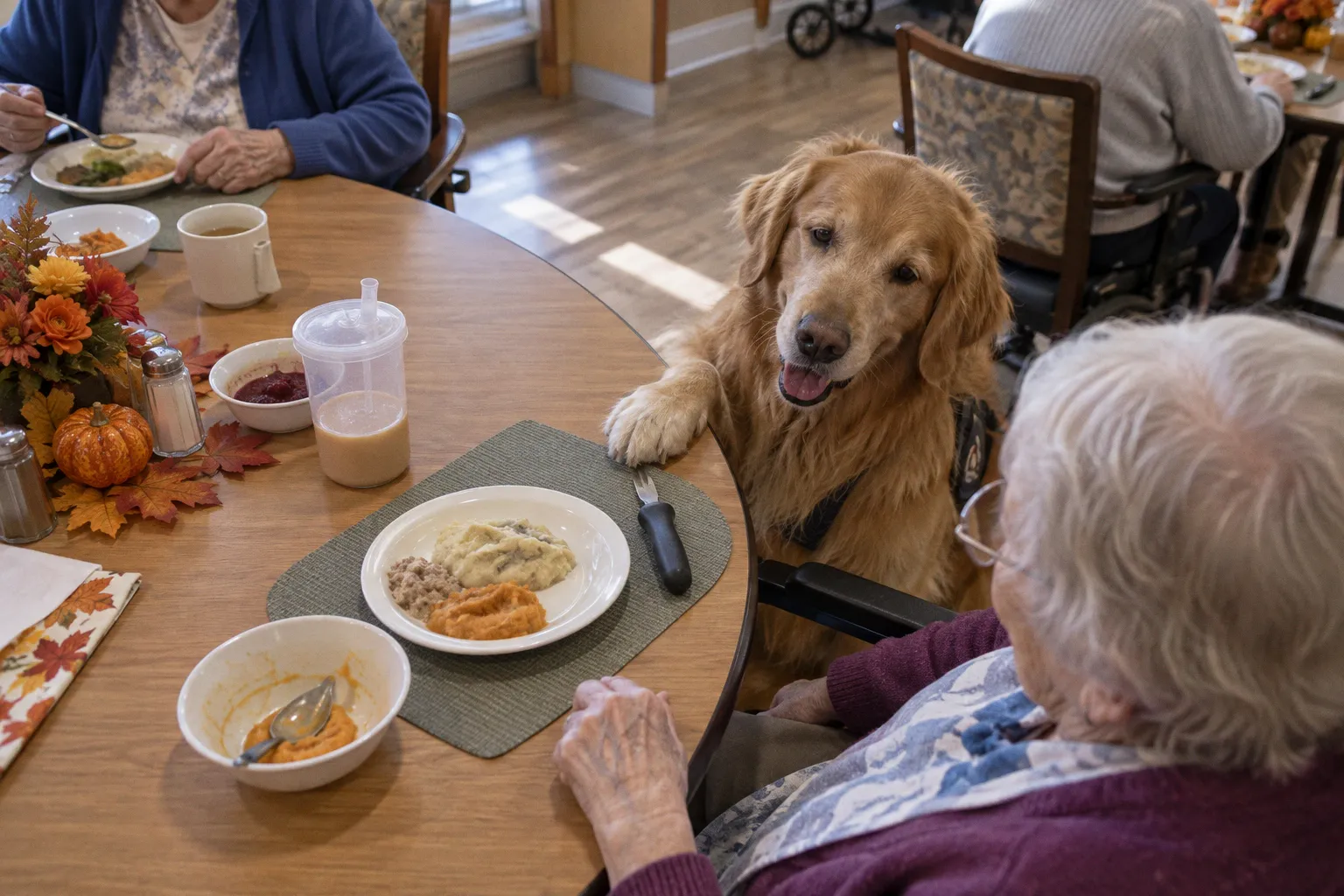
The strongest case for animal-assisted therapy is narrower and more practical: a well-run program may reduce distress, interrupt isolation, support engagement, and create a calming sensory experience for residents who do not respond to conventional activities.
The financial question, then, is not whether a dog or cat can make residents feel better. Many residents clearly do. The question is whether the measurable benefit justifies the staffing, training, infection-control planning, scheduling, and risk management required to bring an animal into long-term care.
Our answer is qualified but favorable: pet therapy programs in assisted living can justify their cost when they are targeted, consistent, and evaluated against a clear resident need. They are much harder to defend as an expensive replacement for broad social engagement programs or as a treatment for cognitive decline.
The clinical evidence: meaningful benefits, uneven outcomes
Animal-assisted therapy is often described in vague terms: companionship, comfort, connection. Those effects matter, but they are difficult to compare across facilities unless the program defines what it is trying to change.
The available research gives us several more concrete outcomes. A meta-analysis of 35 randomized controlled trials involving 2,391 adults found significant post-intervention reductions in depression, anxiety, and stress. The reported effect sizes were:
- Depression: Hedges’ g = -0.403
- Anxiety: Hedges’ g = -0.661
- Stress: Hedges’ g = -1.062
These findings support the use of animal-assisted interventions as a meaningful emotional and behavioral support. They do not mean that every resident will experience the same response, or that a single visit will produce a durable clinical change. The studies included different animals, delivery models, populations, and outcome measures. That variation matters when a facility tries to translate research into a daily care program.
A separate study involving nursing home residents who interacted with a therapy cat found no significant difference in Geriatric Depression Scale scores or MMSE cognition compared with control subjects. It did, however, report a 16-point lower systolic blood pressure and a 5-point lower diastolic blood pressure in the intervention group, with both results reported at P = 0.05.
That is an important distinction. The intervention appeared to produce a physiological response without demonstrating a measurable change in depression or cognition during the study period. In practice, we should not dismiss a calming response simply because it does not appear as a better cognitive screening score. At the same time, we should not present lower blood pressure during a therapy encounter as proof of a long-term cardiovascular benefit.
What the evidence supports—and what it does not
The benefits of animal assisted therapy for seniors are most credible when described as short-term or medium-term improvements in mood, stress, anxiety, and social participation.
A survey commissioned by the Human Animal Bond Research Institute and Mars Petcare found that 85% of elderly respondents said pet therapy helped reduce loneliness. That figure reflects self-reported experience rather than a controlled clinical outcome, but it aligns with what caregivers often see: residents who decline group activities may still reach toward an animal, talk to a handler, or remain present longer when the interaction feels personally meaningful.
Research on pet ownership also points in a promising direction. In a study of nearly 8,000 older adults published in JAMA Network Open, pet ownership among people living alone was associated with a slower rate of decline in composite verbal cognition, verbal memory, and verbal fluency over eight years.
This finding should not be used to claim that visiting animals reverse dementia or that adopting a pet is a cognitive treatment. Pet ownership is a complex exposure. It may involve routine, movement, social contact, responsibility, and emotional attachment, not just contact with an animal. A scheduled therapy visit inside a nursing home is not equivalent to living with a pet.
The strongest case for pet therapy is not that it changes dementia. It is that it can change the resident’s experience of a difficult hour.
Comparing pet therapy with standard social engagement
Facilities often compare pet therapy with other activities as if they were interchangeable line items. They are not. A music group, exercise class, resident council, art session, and animal-assisted visit place different demands on the resident and produce different forms of engagement.
Pet therapy is especially useful for residents who have a low sensory baseline for conventional programming. A resident may not tolerate a noisy group room, follow the steps of a craft activity, or participate in a structured discussion. That same resident may respond to the presence of a calm dog by making eye contact, extending a hand, smiling, vocalizing, or remaining in the common area.
Those behavioral expressions are clinically relevant. They give the care team information about what helps the resident regulate and connect.
| Program type | Primary strength | Best fit | Main limitation |
|---|---|---|---|
| Pet therapy visit | Immediate sensory and emotional engagement | Residents who respond to touch, animals, or one-to-one interaction | Requires animal-handler availability and careful risk screening |
| Group social activity | Broad participation and peer connection | Residents who enjoy conversation, games, music, or shared routines | Can overwhelm residents with dementia, hearing loss, or anxiety |
| Exercise or functional fitness | Mobility, strength, balance, and routine | Residents able to follow adapted movement instruction | Does not meet every resident’s emotional or relational needs |
| Music or reminiscence programming | Familiarity, mood support, and shared identity | Residents who respond to sound and familiar songs | Response can vary with noise sensitivity and personal history |
| One-to-one staff engagement | Highly individualized support | Residents with complex behavioral or communication needs | Staff time is limited and consistency can be difficult |
| Pet ownership or resident-based animal care | Daily routine and sustained attachment | Appropriate residents in settings able to support ongoing care | Much greater responsibility than scheduled therapy visits |
This comparison points to a practical conclusion: pet therapy should usually complement social engagement rather than replace it. A facility that cancels a reliable activity program to fund occasional animal visits may reduce access for residents who do not enjoy or cannot safely participate in pet interactions.
The better model is layered programming. Use group activities for community connection, functional fitness for mobility, quiet one-to-one contact for residents who need reduced stimulation, and animal-assisted visits where the sensory and relational response is distinctive.
Cost structures: what the investment actually includes
The cost of pet therapy in long-term care varies considerably because the phrase can describe several different arrangements.
At the lower-cost end, a facility may receive visits from a volunteer and a qualified therapy animal. This may reduce direct program expense, although it does not eliminate operational costs. Someone still has to coordinate scheduling, screen residents, prepare the environment, supervise the visit, document responses, and manage interruptions to the care routine.
Professional group pet therapy sessions generally average around $40 to $50 per hour. That figure may look modest when compared with other contracted services, but the real cost depends on frequency and scale. A weekly visit is a different commitment from daily coverage across multiple neighborhoods. A single animal-handler team cannot provide meaningful individual time to every resident in a large building during one short session.
Formal therapy dog team training for handlers can range from $2,000 to $5,000. That investment may be appropriate for an organization developing an internal program, but training alone does not create a safe or clinically useful service. The facility must also define who can participate, how animals are introduced, which residents require additional screening, and how the team responds when a resident becomes distressed.
Before approving a program, we recommend separating the budget into four categories:
1. Direct service cost. This includes the handler’s fee, volunteer coordination, training, or contracted agency cost.
2. Staffing time. A staff member may need to escort residents, supervise contact, redirect unsafe behavior, and record the resident’s response.
3. Environmental preparation. The space may need to be quieter, uncluttered, and accessible for wheelchairs, walkers, and residents who require close observation.
4. Program maintenance. Scheduling, communication with families, incident documentation, and periodic review all require attention after the initial launch.
A volunteer program can therefore be inexpensive without being operationally free. Conversely, a paid professional program may provide better consistency and documentation, making it easier to evaluate whether the expense is producing a useful outcome.
A simple way to think about value
The return on investment should not be reduced to medication savings unless a facility has reliable data to support that conclusion. Current evidence does not establish a precise dollar-for-dollar reduction in medication expenditure or overall facility costs attributable to pet therapy.
Instead, assess value at the resident and program levels:
- Does the resident remain engaged longer?
- Are distress behaviors less frequent during or after the visit?
- Does the resident accept care more readily?
- Is the resident more willing to leave the room or enter a communal space?
- Does the interaction support communication with staff or family?
- Can the program reach residents who are otherwise excluded from activities?
- Does the benefit persist beyond the visit, even for a limited period?
These measures are not a substitute for formal clinical outcomes. They are a practical way to determine whether the program is doing the work the facility intended it to do.
Integrating therapy animals into nursing home care
The most successful programs do not treat pet therapy as entertainment dropped into the activity calendar. They connect the visit to care planning.
Before a resident participates, the team should understand the person’s history and current sensory baseline. Did the resident previously live with animals? Are dogs associated with comfort, fear, or no particular meaning? Does the resident enjoy touch, or does tactile contact increase agitation? Is the person able to communicate discomfort reliably?
We also need to consider environmental triggers. A resident may respond well to a small, quiet dog in a private room but become distressed when several animals, handlers, wheelchairs, and visitors gather in a crowded lounge. Another resident may prefer watching from a distance rather than touching the animal. Participation should not be defined as petting.
A clinically sound visit often follows a predictable sequence:
1. Prepare the resident and environment. Reduce unnecessary noise, position the resident safely, and explain what will happen in simple adult language.
2. Introduce the animal gradually. Allow the resident to observe before encouraging contact. Watch for changes in facial expression, posture, breathing, attention, and vocalization.
3. Follow the resident’s behavioral expression. Engagement may include eye contact, conversation, reaching, smiling, singing, or sustained calm—not only direct touch.
4. Keep the interaction within the resident’s tolerance. End the visit when the resident shows fatigue, avoidance, fear, increased agitation, or overstimulation.
5. Document the response. Record what happened before, during, and after the interaction, including the duration of observable benefit.
6. Use the information in future care. If the visit reduced distress, the same environmental conditions may help during bathing, mealtimes, or transitions.
This process protects dignity because it treats the resident as an active participant rather than an audience for an activity. Consent and assent remain important even when a person has cognitive impairment. A resident who turns away, withdraws a hand, stiffens, or vocalizes distress is communicating a boundary.
Safety is part of the clinical design
Animal-assisted therapy requires more than a friendly animal. The animal should be suitable for the setting, predictable around mobility equipment, and able to tolerate unusual sounds and movements. The handler must recognize stress signals in the animal and end the interaction before the animal becomes overwhelmed.
The facility also needs a process for residents with:
- Animal allergies or respiratory sensitivity
- Fear of dogs, cats, or unfamiliar animals
- Open wounds or conditions that make contact inappropriate
- Infection-control concerns
- A history of striking, grabbing, or unsafe impulsive behavior
- Severe sensory overstimulation
- Delirium or acute medical instability
These considerations do not mean that residents with dementia or behavioral symptoms should be excluded automatically. They mean that the visit should be adapted. A short observation period, a barrier-free visual encounter, or contact with a handler rather than the animal may be the appropriate starting point.
Measuring outcomes without overstating the science
A common weakness in senior living programming is that a promising activity is launched, residents enjoy it, and then the facility cannot explain whether the program is worth continuing. Enjoyment is valuable, but a comparison requires a defined baseline.
We can evaluate pet therapy using a small set of repeatable observations rather than an elaborate research protocol. For selected residents, track:
- Mood or visible distress before and after the visit
- Duration of engagement
- Willingness to participate in care or meals afterward
- Frequency of specific behavioral expressions
- Sleep or rest patterns when relevant to the care plan
- Social interaction with staff or peers
- Resident, family, and staff feedback
- Any adverse events, including fear, falls, scratches, or escalation
The goal is not to turn every warm interaction into a score. The goal is to distinguish a meaningful pattern from a memorable single encounter.
For example, if a resident is calmer for ten minutes after each visit, that may still be useful if those ten minutes consistently make a difficult transition safer or more tolerable. If another resident appears cheerful during the visit but becomes distressed afterward, the intervention needs to be modified rather than celebrated as a success.
The clinical outcomes of pet therapy for elderly residents are also influenced by dosage and consistency. An occasional visit may provide a temporary mood benefit. A structured program may support routine and anticipation. These are different claims and should be measured differently.
The limits of intervention: cognitive decline and medication use
Pet therapy has clear limits. It does not reverse established dementia, restore lost memory, or eliminate the need for skilled nursing care. Research on dog-assisted interventions shows a similarly mixed pattern: in a systematic review of 18 high-quality studies, 15 reported at least one significant positive effect, but most measured outcomes did not show a significant overall treatment effect. Positive findings were identified for stress, mood, and psychiatric conditions.
That is encouraging, but it is not a universal treatment effect.
We should also be cautious about claims that animal-assisted therapy reduces reliance on psychotropic medication. A resident may need fewer PRN interventions because a particular trigger is better managed, but that observation does not establish that the facility can broadly reduce medication use through pet therapy. Medication changes require individual clinical assessment and should never be made simply because a resident enjoys animal contact.
The same caution applies to cognition. A resident may communicate more, focus longer, or retrieve a familiar memory during a visit. Those are valuable behavioral expressions. They do not necessarily indicate an improvement on a cognitive screening instrument or a change in the underlying disease process.
A good pet therapy program does not promise to restore what dementia has taken. It creates more opportunities for comfort, choice, and meaningful participation in the present.
A practical verdict for senior living operators
Pet therapy is a worthwhile investment when a facility has a defined population, a reliable delivery model, and a plan for measuring response. It is particularly well suited to residents experiencing loneliness, anxiety, social withdrawal, or distress that appears responsive to calming sensory input and one-to-one attention.
It is less compelling when the program is purchased as a branding feature, scheduled without resident-specific goals, or used to compensate for inadequate staffing and limited social programming. An animal cannot replace a consistent caregiver, a well-designed activity calendar, appropriate pain management, or a thoughtful approach to behavioral symptoms.
For most communities, the sensible path is to begin with a limited pilot:
- Select residents whose care plans suggest a likely benefit.
- Use a qualified handler or carefully structured volunteer partnership.
- Schedule visits consistently enough to observe a pattern.
- Train staff to recognize both resident and animal stress signals.
- Track engagement, distress, and practical care outcomes.
- Review the program after several cycles and compare its value with other activities.
The final decision should rest on more than attendance numbers. Ask whether the program reaches residents who are otherwise difficult to engage, whether it supports dignity during daily care, and whether its benefits are distinct from those of existing activities.
When the answer is yes, the investment can be justified even without a dramatic effect on cognition or medication use. In long-term care, a program that reliably reduces distress, supports connection, and gives a resident more control over a difficult day has clinical value. The standard should be neither sentimental approval nor financial dismissal. It should be disciplined compassion: offer the intervention where it helps, measure what changes, and preserve the resident’s right to choose how that help is received.
FAQ
Can pet therapy help reduce medication use in senior living?
Does pet therapy improve cognitive function in residents with dementia?
What are the primary costs associated with running a pet therapy program?
Is pet therapy a good replacement for social engagement programs?
How should a facility evaluate if a pet therapy program is successful?
Related articles
 Senior Wellness & LivingSocial activities for introverted seniors in assisted living
 Senior Wellness & LivingAssisted Living Dining Options for Specific Dietary Needs
 Senior Wellness & LivingSeated Exercise Gear for Seniors: What Works and When
 Senior Wellness & LivingGeriatric Protein Drinks: Testing Three Formulations