Functional fitness classes vs individual therapy for seniors
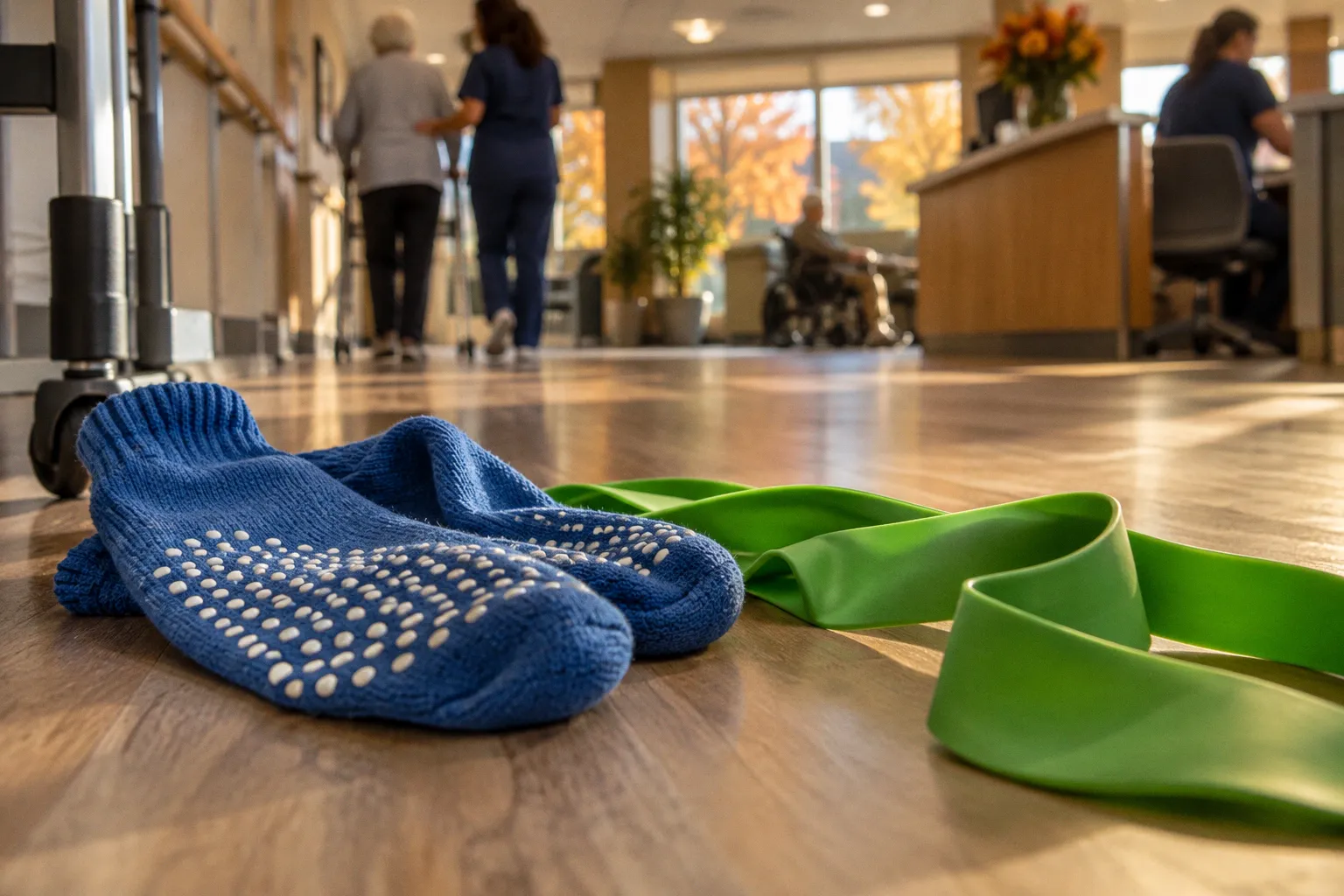
The right choice depends on why the older adult is exercising, how safely they can move, whether they can follow instructions, and whether the goal is recovery from a defined medical problem or maintenance of daily function.
Individual physical therapy is a clinical intervention. It is designed for situations such as recovery after surgery, a significant injury, marked balance impairment, or a high risk of falling. Group functional fitness is different: it is usually built around maintaining strength, mobility, coordination, confidence, and participation in everyday activities. For many residents in assisted living or long-term care, it can also make exercise more sustainable because the class becomes part of the social rhythm of the community.
The most reliable approach is often not either-or. A resident may need personalized physical therapy first and then benefit from a supervised group program once the acute problem is stable.
The clinical necessity of individual physical therapy
Individual physical therapy begins with an assessment of a specific impairment. A licensed Doctor of Physical Therapy may examine gait, lower-extremity strength, joint range of motion, transfers, pain, balance reactions, endurance, and the functional demands of the person’s home or care setting. The treatment plan is then adjusted to the person’s diagnosis, medical history, and response to exercise.
That level of individualization matters when the margin for error is small.
A person recovering from hip or knee surgery may need carefully staged loading and instruction in transfers. Someone with a new neurological event may need close observation for asymmetrical movement, fatigue, or changes in coordination. A resident with repeated falls may require a detailed review of gait mechanics, footwear, assistive devices, environmental hazards, and the way medications or orthostatic symptoms affect mobility.
In these situations, a general class cannot provide enough clinical precision on its own. Even an excellent instructor may not be able to watch every movement closely enough when several participants have different diagnoses and safety needs.
Individual therapy is especially appropriate when a senior has:
- A recent surgery, fracture, severe injury, or acute pain that limits movement.
- A new decline in walking, transfers, or stair management.
- Significant balance instability or a history of frequent falls.
- Severe cognitive decline that makes group instructions difficult to follow.
- A neurological or cardiopulmonary condition requiring close monitoring.
- A major difference between the strength or control of one side of the body and the other.
- A need for hands-on assistance, specialized equipment, or a highly modified exercise sequence.
The purpose is not simply to make exercise harder. It is to identify what is limiting function and address it without creating a new injury.
Why supervision changes the exercise prescription
In a group class, the instructor may offer several levels of an exercise. In individual therapy, the clinician can change the movement immediately based on a subtle sign: a knee drifting inward during a sit-to-stand, breath-holding during exertion, a new limp, delayed balance recovery, or confusion about the order of a task.
Those details are clinically meaningful. They may indicate fatigue, pain, fear, medication effects, weakness, or a need to change the exercise. A personalized plan can also build around the exact activities the resident wants to regain, whether that means walking to the dining room, standing long enough to prepare a meal, getting in and out of a car, or managing a walker over uneven ground.
This is where personalized physical therapy for seniors has its clearest advantage: it connects the exercise directly to the problem that brought the person to care.
Individual therapy is the right tool when the question is, “What is causing this loss of function, and how do we treat it safely?”
That does not mean one-on-one therapy is automatically the best long-term exercise format. Clinical precision and long-term adherence are related, but they are not the same outcome.
The social and cognitive edge of group functional fitness
Group functional fitness classes typically focus on movements that support daily life: standing from a chair, stepping, reaching, carrying, turning, maintaining posture, and improving lower- and upper-body strength. The instructor can adapt the exercises for different ability levels, but the class follows a shared structure.
That shared structure can be powerful. Residents often find it easier to attend an activity that has a regular time, familiar faces, and an immediate social purpose. The group provides an external cue to participate, which can matter when motivation, confidence, or mood is inconsistent.
Research on older adults has associated group exercise with stronger lower-limb performance and better cognitive scores in areas such as memory, attention, and visuospatial function compared with exercising alone. These findings do not prove that every group class will improve cognition, and they should not be used as a promise of a specific outcome. They do show why the social setting is more than a pleasant extra. Participation, conversation, movement planning, and responding to shared instructions all create a richer activity than completing a routine in isolation.
The group format may also support psychological well-being. A 16-week functional fitness intervention using the Fullerton Functional Fitness Test found improvements in physical measures along with reduced perceived stress and increases in resilience, happiness, upper-body flexibility, and agility or balance. The practical lesson is not that sixteen weeks is a guaranteed deadline for every resident. It is that measurable functional and emotional change often requires a consistent program rather than occasional activity.
What group exercise can maintain
Once a resident is medically stable and able to follow the instructor’s directions, a class can help preserve gains from rehabilitation. It may support:
- Lower-body strength for standing and transfers.
- Agility and balance needed for turning and navigating shared spaces.
- Upper-body flexibility for dressing, grooming, and reaching.
- Endurance for walking to meals, activities, or appointments.
- Confidence after a period of inactivity or a previous fall.
- Regular participation in a senior wellness program.
- Social connection that makes continued attendance more likely.
Functional mobility training for seniors should remain connected to real tasks. A class that consists only of isolated movements may be safe and pleasant but less transferable to daily routines. We want residents to practice the components of mobility while also understanding how those components appear in ordinary life.
For example, a repeated sit-to-stand is not just a leg exercise. It relates to getting up from a dining chair or toilet. Reaching outside the base of support is not merely a flexibility drill. It relates to retrieving an item from a shelf. Stepping in different directions prepares the body for changes in walking paths and crowded spaces.
The adherence advantage
A program can be clinically sound and still fail if the resident stops attending. Group-delivered lifestyle-integrated functional exercise programs have been studied as lower-resource alternatives to individualized home programs, with comparable effects in areas such as fall reduction and functional mobility. Group-based follow-up programs after discharge have also been associated with lower reported fall rates, stronger adherence, and improved balance confidence compared with standard individual home exercise programs.
The point is not that group exercise is inherently safer or more effective for everyone. The point is that adherence is part of effectiveness. A routine completed consistently may do more for long-term function than an ideal routine that is abandoned after a few sessions.
For families and care teams, this means we should ask not only whether a resident can perform an exercise, but whether the setting makes it realistic for them to return next week.
Group fitness versus individual therapy: the practical comparison
The distinction becomes clearer when we compare the two formats by purpose rather than by reputation.
| Parameter | Individual physical therapy | Group functional fitness |
|---|---|---|
| Primary role | Clinical rehabilitation for a defined impairment or medical condition | Functional maintenance, conditioning, and ongoing wellness |
| Typical provider | Licensed Doctor of Physical Therapy or physical therapy team | Qualified fitness, wellness, or rehabilitation professional, depending on the program |
| Level of customization | High; exercises and progression are built around one person | Moderate; exercises are adapted within a shared class structure |
| Best fit | Post-surgical recovery, severe injury, new decline, high fall risk, complex medical history | Stable residents seeking strength, balance, mobility, endurance, and regular activity |
| Supervision | One-on-one observation and hands-on or close clinical support when needed | Instructor monitors several participants and modifies exercises for the group |
| Social connection | Limited during the treatment session, though family or caregivers may participate | Built into the format through shared activity and routine |
| Cognitive demand | Instructions can be repeated and simplified for one person | Requires readiness to follow group cues and tolerate a shared pace |
| Long-term adherence | Depends on continued access, motivation, and transition planning | Often supported by routine, peers, and community participation |
| Role after rehabilitation | May continue while a specific impairment requires treatment | Often useful for maintenance once acute goals are stabilized |
| Main limitation | May be resource-intensive and can feel isolated | Cannot replace individualized clinical care for complex or unsafe cases |
This table is not a scoring system. A resident may move between the two columns over time. Someone who needs one-on-one therapy in January may be ready for a small group in March, while another resident may need to return to individual treatment after a fall, hospitalization, or noticeable functional change.
Bridging the gap: when to transition from rehab to maintenance
The transition from therapy to group exercise should be based on function and safety, not on an arbitrary number of visits. We should look for evidence that the resident can participate without requiring constant correction or emergency assistance.
Signs that a resident may be ready for a supervised group functional fitness class include:
1. The acute medical problem is stable. Pain, surgical precautions, weight-bearing restrictions, or other short-term limitations have been addressed by the appropriate clinical team.
2. The resident can follow basic directions. They do not need to remember a complicated sequence independently, but they can respond to clear verbal or visual cues.
3. Transfers are reasonably predictable. The person can sit, stand, and reposition with the level of assistance available in the class environment.
4. Balance risk is understood. The instructor and care team know whether the resident needs a chair, walker, gait belt, close guarding, or another safety adaptation.
5. Fatigue is manageable. The resident can participate in short intervals without a concerning change in breathing, alertness, pain, or movement quality.
6. The class can accommodate the person’s needs. A smaller class, seated version, slower pace, or additional staff support may be necessary.
A transition does not have to be permanent. We should reassess after a fall, a hospital stay, a medication change, a new diagnosis, or an observable decline in walking or transfers. The goal is to match the level of support to the person’s current presentation rather than treating the care plan as fixed.
Why the class size and environment matter
A group of six to eight participants may allow for meaningful clinical-style supervision, but the number alone does not determine safety. The relevant questions are how complex the participants’ needs are, how many staff members are present, what equipment is used, and whether the instructor can see every participant during higher-risk movements.
A class with eight residents who can exercise from chairs may require a different staffing model from a class with eight residents practicing standing balance and directional stepping. The physical environment also matters. Clear walking paths, stable chairs, appropriate lighting, accessible hand supports, and enough space to turn can reduce environmental triggers for unsafe movement.
For residents living with cognitive impairment, predictability is part of the intervention. A consistent room, familiar instructor, repeated sequence, simple cueing, and a calm sensory baseline can reduce confusion. Loud music, crowded equipment, glare, or frequent changes in routine may make participation harder even when the exercises themselves are appropriate.
Safety first: assessing fall risk and cognitive readiness
More than one in four adults aged 65 and older experience a fall each year. That figure is a reminder that fall prevention cannot be treated as a decorative feature of senior wellness programming. It has to shape the exercise choice, supervision, and environment.
A group class should not begin with a generic assumption that everyone can stand, walk, or change direction safely. The care team should know the resident’s recent fall history, use of mobility devices, footwear needs, vision or hearing limitations, and any symptoms such as dizziness or lightheadedness. We also need to distinguish fear of falling from actual balance impairment. Both can limit participation, but they may require different responses.
Cognitive status is a safety variable, not a label
A diagnosis of dementia does not automatically exclude someone from group exercise. Many residents with cognitive impairment participate successfully when the activity is familiar, structured, and appropriately simplified. The question is whether the person can engage with the available cues and whether staff can provide the level of support required.
Severe cognitive decline may make one-on-one therapy the safer starting point, particularly if the resident cannot recognize hazards, becomes distressed by unfamiliar directions, or moves impulsively. In other cases, a seated group with repeated visual demonstrations may be more successful than an individual session that feels unfamiliar or demanding.
We should observe the person’s behavioral expression rather than interpreting every refusal as lack of motivation. A resident who leaves the room may be responding to noise, pain, fear, fatigue, or an environmental trigger. Adjusting the sensory baseline—reducing background noise, changing the chair position, offering a familiar cue, or shortening the session—may reveal that the person can participate after all.
A safer progression for a new participant
When a resident is starting group functional fitness, a gradual progression is usually more informative than a full-length session on the first day. The instructor can begin by observing how the resident responds to:
- Entering and settling into the room.
- Understanding the first few movements.
- Moving from sitting to standing.
- Following a change in direction or pace.
- Managing fatigue without losing movement quality.
- Returning to a seated position safely.
- Participating alongside other residents.
A successful first session is not necessarily the one with the greatest number of repetitions. It may be the session in which the resident learns the room, tolerates the routine, and leaves without excessive fatigue or distress. That foundation supports more meaningful progression later.
Measuring success beyond the exercise session
The best senior wellness program selection decisions use outcomes that matter in daily life. A class can be successful even if the resident never performs a technically impressive movement. Conversely, a resident may complete every exercise in a session without becoming more independent in the activities that matter to them.
We can track progress through practical observations:
- Does the resident stand from a chair with less assistance?
- Can they walk farther before needing to rest?
- Are they more confident turning or navigating a hallway?
- Do they participate in meals and activities more consistently?
- Can they recover from a small balance disturbance more effectively?
- Is their upper-body mobility improving during dressing or grooming?
- Are they attending regularly rather than missing sessions because of fear or discomfort?
- Does the resident appear more settled before and after activity?
Formal measures may also help. The Fullerton Functional Fitness Test, for example, evaluates several aspects of function in older adults, including strength, flexibility, agility, balance, and endurance. These measures can help a care team see change that is not obvious from day to day. They should complement—not replace—clinical judgment and resident-centered goals.
The same principle applies to fall data. A lower number of reported falls is meaningful, but it should be interpreted alongside exposure to activity, changes in mobility, supervision, and reporting practices. We should avoid claiming that a single class format eliminates falls. Fall risk is influenced by strength, balance, vision, medications, cognition, footwear, environment, and acute illness.
The best exercise plan is not the one that looks most advanced in the activity room. It is the one that safely improves what the resident needs to do outside it.
Making the decision in a care setting
When families and care teams are choosing between group fitness and rehab, the decision can be organized around five questions:
1. What changed?
If the resident is recovering from surgery, injury, hospitalization, or a new decline, individual physical therapy deserves priority until the problem is assessed.
2. What is the current risk?
Severe balance instability, repeated falls, unpredictable movement, or inability to follow cues may require one-on-one care.
3. What is the functional goal?
Regaining a specific ability after an acute event points toward PT. Maintaining mobility, strength, confidence, and participation after stabilization points toward group fitness.
4. What setting will the resident actually tolerate?
A technically ideal plan is not useful if noise, fatigue, privacy concerns, or social discomfort prevent participation.
5. How will progress be reviewed?
The program should have a method for communicating changes in walking, transfers, pain, fatigue, falls, and attendance to the relevant clinical team.
For many older adults, the strongest plan is sequential: evaluate and treat the acute problem individually, then preserve the gains through a supervised group program. Some residents will need both at the same time. For example, one-on-one therapy may address a specific gait deficit while group exercise supports general conditioning and social engagement.
The distinction between rehabilitation and wellness should remain clear, particularly when discussing cost, clinical responsibility, and expected outcomes. General functional fitness is not automatically covered or delivered in the same way as prescribed physical therapy, and a group instructor should not be expected to manage problems that require clinical diagnosis or treatment.
The practical verdict
Individual physical therapy is the better choice when a senior has an acute injury, post-surgical needs, severe cognitive decline, substantial balance instability, or a high risk of falling. It provides the close assessment and customized progression required to restore function safely.
Group functional fitness is the better choice for residents who are medically stable, can follow adapted instructions, and need a sustainable way to maintain strength, balance, mobility, confidence, and social connection. Its value is not limited to exercise physiology. A consistent group can support adherence, reduce isolation, and make functional practice part of community life.
For most senior living settings, the question should not be whether group fitness can replace physical therapy. It cannot—and should not be used that way for acute or high-risk conditions. The better question is how the two services can work together, with individual therapy addressing clinical problems and group fitness helping residents retain function over time.
A careful transition, an appropriate level of supervision, and attention to the resident’s sensory and cognitive needs allow us to pursue activity without turning safety into an afterthought. That is the standard we should hold: not maximal exercise, but meaningful movement delivered at the right level of support, with the resident’s dignity preserved throughout.
FAQ
When should a senior choose individual physical therapy over a group fitness class?
Can someone with cognitive decline participate in group functional fitness?
What are the main benefits of group functional fitness for seniors?
How do I know if a resident is ready to transition from physical therapy to a group class?
Does group exercise effectively prevent falls?
Related articles
 Senior Wellness & LivingSocial activities for introverted seniors in assisted living
 Senior Wellness & LivingAssisted Living Dining Options for Specific Dietary Needs
 Senior Wellness & LivingSeated Exercise Gear for Seniors: What Works and When
 Senior Wellness & LivingGeriatric Protein Drinks: Testing Three Formulations