Aquatic Therapy for Seniors: Is It Worth the Cost?
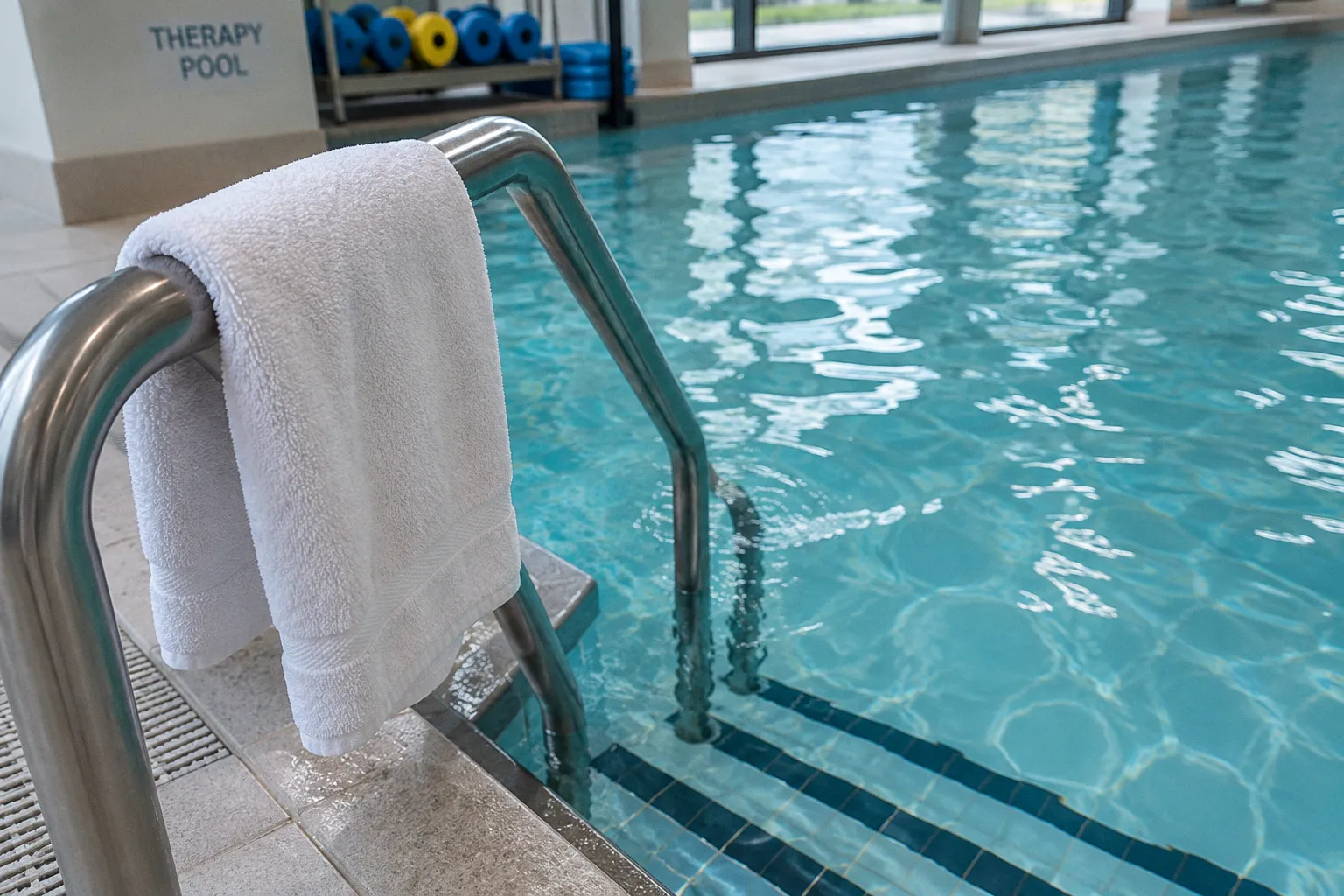
Every time we progress their sit-to-stand transfer or attempt closed-chain terminal knee extension, swelling spikes and quadriceps activation flatlines. Then we move them into a chest-deep pool at 92°F, and within two sessions they're performing mini-squats with proper knee tracking and measurable improvements in active flexion. That is the clinical reality of aquatic physical therapy for seniors — when land-based loading becomes the ceiling on recovery, water changes the physics of the problem. But here's what most families don't realize: it isn't cheap, and the insurance picture is far more complicated than the brochures suggest.
The Mechanics of Hydrotherapy: Why Water Aids Senior Recovery
Water isn't a gimmick. It's a tool with three measurable biomechanical properties that directly address the most common barriers I see in geriatric rehabilitation: pain-limited weight-bearing, poor proprioception, and deconditioned gait patterns.
Buoyancy reduces joint loading. When a patient is submerged to roughly the xiphoid process — chest-deep — they retain only about 30% of their body weight on their lower extremities. At the umbilicus, that figure climbs to roughly 50%. For a patient with hip osteoarthritis, a recent lower-extremity fracture, or post-surgical precautions that restrict loading, this unloads the joint enough to permit gait training and closed-chain exercise that would otherwise be contraindicated. I've used this principle with stroke survivors working on stance-phase stability, post-THA patients rebuilding hip abductor strength, and lumbar stenosis cases that cannot tolerate axial compression on land.
Viscosity creates controlled resistance. Water is significantly denser than air, which means every movement through it demands concentric muscle work proportional to the speed of motion. This is gold for seniors rebuilding load-bearing capacity after a fall or prolonged hospitalization. You can progress resistance by changing the surface area (cupping the hands increases drag), changing speed, or changing direction — without adding a single piece of equipment.
Hydrostatic pressure supports circulation and reduces edema. The pressure gradient created by submersion assists venous return from the lower extremities, which is one reason post-surgical knees and ankles swell less aggressively after pool sessions than after equivalent land work. For patients with chronic venous insufficiency or post-operative edema, this is a clinical win, not a spa perk.
Buoyancy unloads the joint, viscosity loads the muscle, and hydrostatic pressure manages the swelling. That's the trifecta driving functional recovery.
Pool temperature matters more than people think. Therapeutic aquatic work for seniors generally runs between 88°F and 94°F. Warm water promotes muscle relaxation and improves blood flow to working muscle, which directly translates into better active range of motion. Cooler water — below roughly 85°F — can elevate resting heart rate and blood pressure, which I avoid in any patient with cardiovascular compromise or uncontrolled hypertension.
Navigating Medicare Part B Coverage for Aquatic Rehabilitation
Here's the bottom line on Original Medicare: Medicare Part B does cover medically necessary outpatient aquatic physical therapy — but only when specific conditions are met, and the phrase "medically necessary" carries real weight.
To qualify for coverage, three things must be true:
- A physician, nurse practitioner, physician assistant, or clinical nurse specialist must write a prescription or referral stating that aquatic therapy is medically necessary for the patient's specific condition.
- The therapy must be delivered by — or directly supervised by — a licensed physical therapist. A licensed physical therapist assistant may also deliver covered therapy when working under the direction and supervision of a physical therapist.
- The treatment must be provided in an outpatient setting that participates in Medicare, such as a hospital outpatient department, a private practice clinic, or a skilled nursing facility outpatient program.
When all three conditions align, Medicare Part B pays 80% of the Medicare-approved amount after the patient's annual Part B deductible is met. The patient is responsible for the remaining 20% coinsurance. If the patient carries a Medigap supplemental plan or has Medicaid as a secondary payer, that 20% may be picked up entirely or in part — but that's plan-specific, and I always tell families to confirm with their carrier before the first session.
What Medicare does not cover is equally important. Original Medicare does not pay for general pool access, recreational swim passes, unguided pool exercise classes, or non-skilled maintenance water activities. If a senior is enrolled in a Medicare Advantage plan (Part C), they may have access to fitness benefits through programs like SilverSneakers or Renew Active that include pool access — but those are wellness benefits, not covered therapy. Treating a SilverSneakers pool pass as "covered aquatic physical therapy for seniors" is one of the most common and most expensive mistakes I see families make.
Financial Breakdown: Understanding Out-of-Pocket Costs and Session Fees
For patients paying out of pocket — either because they haven't met their deductible, because their plan excludes aquatic therapy, or because they're uninsured — the math gets uncomfortable fast. Based on national pricing data published by health-cost transparency platforms, a single aquatic therapy session typically runs between $75 and $200+, with a national average clustered around $100 to $107 per session.
| Setting | Typical Single-Session Cost | Notes |
|---|---|---|
| Hospital outpatient PT clinic | $150–$250+ | Higher overhead; frequently billed under Part B |
| Private PT practice with dedicated pool | $100–$175 | Varies by region; package rates often available |
| Community health clinic | $75–$125 | Sliding-scale fees are common |
| Senior center or YMCA (non-therapeutic) | $10–$40 membership + class fees | Not covered as skilled therapy |
At a standard protocol of 2 to 3 sessions per week for 6 to 12 weeks — typical for post-surgical rehab or significant deconditioning — self-pay patients can expect to spend anywhere from $1,200 to $7,200+ for a full course of treatment. That's not trivial, and it explains why I push hard on the documentation side at the very first visit.
A typical 8-week course of self-pay aquatic therapy runs $1,600 to $2,500. Insurance navigation is where the savings live.
For patients with Medicare Advantage plans, the coverage picture varies wildly by carrier, region, and plan year. Some MA plans offer richer outpatient therapy benefits than Original Medicare, others require prior authorization before the first session, and a few impose visit caps well below what's clinically indicated. I never assume coverage based on plan type — every patient gets the same conversation: "Call your plan and ask whether outpatient aquatic PT is a covered benefit, whether you need prior authorization, and what your per-session copay will be."
Clinical Documentation Requirements for Continued Insurance Approval
This is where the clinical and the financial collide. Medicare doesn't hand you a blank check for 30 pool sessions. The therapy cap was eliminated years ago, but the documentation threshold is real and it's enforced.
The trigger point is the 8-session mark. Beyond the initial eight visits, the provider must supply detailed medical documentation justifying continued care. After that, additional documentation is required every 10 sessions — and "additional documentation" means specific things:
- Functional goals written in measurable terms — "increase 6-minute walk test distance from 200 ft to 350 ft," "improve sit-to-stand time from 4.2 sec to 2.8 sec," "achieve independent community ambulation over uneven surfaces."
- Specific water-based exercises being performed, with parameters — sets, reps, depth of submersion, water temperature, equipment used.
- A clinical justification explaining why the patient's condition requires a water environment rather than land-based therapy, and why it requires skilled intervention from a licensed professional.
The core of the justification is medical necessity for both the aquatic setting and the skilled therapy. Providers must document why the patient's specific condition, limitations, and functional deficits make the properties of water — buoyancy, viscosity, hydrostatic pressure — medically required to achieve the therapeutic goals, and why the clinical decisions and skilled techniques of a therapist are needed to deliver that treatment safely and effectively.
If that documentation isn't on file and isn't defensible, the claim can be denied — even when the patient has a legitimate diagnosis and a legitimate need. I've watched seniors hit with surprise bills because their therapist's notes read like a generic exercise log instead of a clinical justification. The standard for continued approval centers on justifying the medical necessity of the aquatic environment and the skilled care provided.
The practical takeaway for families: ask your therapist at the first visit how they handle Medicare documentation, and request a copy of the plan of care in writing. If the answer is vague, push back. Good documentation protects your wallet.
Distinguishing Between Skilled Therapy and Recreational Pool Access
This is the line I draw in the clinic every week, and it's the one most patients don't know exists.
Skilled aquatic therapy is delivered by a licensed PT, or by a licensed PTA under the direction and supervision of a PT, following a physician's order, in a clinical or outpatient setting, with a documented plan of care aimed at specific functional deficits. It is billable, insurable, and outcomes-driven. Clinical decisions are being made session-to-session: progressing exercises, modifying depth, adjusting intensity, responding to vitals.
Recreational pool access is everything else. A SilverSneakers pool class at the local YMCA. A senior center water aerobics session. A lap swim membership. These are wellness activities. They have genuine health value — I'm not arguing otherwise — but they are not covered under Original Medicare as therapy, and no amount of documentation will turn a recreation membership into a reimbursable service.
The distinction matters because I've seen families burn through $1,500 in "aquatic therapy" payments only to discover their loved one was enrolled in a community water exercise class with no licensed therapist involved. The receipt said "aquatic therapy" on it; the service delivered was group fitness.
When I recommend water therapy for senior joint pain or any other clinical indication, I'm specific. I'll name the clinic, confirm that a licensed PT will be directing the session, verify the setting is Medicare-participating, and review the documentation plan. Anything less than that is recreational exercise dressed in clinical language, and seniors deserve better than a marketing pitch when they're trying to recover from a fall, a stroke, or a joint replacement.
Covered aquatic therapy is defined by its clinical framework: a licensed therapist's skilled intervention within a documented plan of care. Outside that framework, it's a health club membership.
The Honest Verdict on Aquatic Therapy for Older Adults
Here's where I land after years of putting seniors in pools: aquatic physical therapy for seniors is not a luxury and it's not a gimmick. It's a clinically validated intervention that solves specific problems — joint unloading, edema management, gait retraining, fall prevention — when land-based therapy hits a wall. The patients who benefit most are those with weight-bearing restrictions, severe arthritis pain, post-surgical edema, balance deficits that limit land-based progression, or deconditioning so advanced that upright exercise isn't yet safe.
But the cost is real, and the coverage rules are unforgiving. Medicare Part B will carry a significant share of the bill for qualifying patients, but only with proper physician documentation and proper clinical justification. Self-pay patients should budget $1,500 to $5,000 for a typical rehabilitation course, depending on frequency and setting. Anyone quoting you "Medicare covers it all" or "$50 per session, no prescription needed" is selling you recreation, not rehabilitation.
If you're weighing hydrotherapy vs land physical therapy for elderly recovery, my clinical algorithm is straightforward: start with land if the patient can tolerate it, because land-based loading produces stronger bone-density and balance adaptations over time. Move to water when pain, swelling, weight-bearing restrictions, or fall risk make land unsafe or intolerable. Use both when the patient can afford the time and the clinic has the resources to deliver them sequentially.
Don't pay for water you don't need. Don't skip water you do need because someone told you Medicare wouldn't cover it. Get the prescription, verify the therapist's license, read the plan of care, and track the functional goals. That's how you get the clinical outcome and protect the checkbook at the same time.
FAQ
Does Medicare cover aquatic physical therapy for seniors?
How much does aquatic therapy for seniors cost?
What documentation is needed to continue aquatic therapy after eight visits?
Is a SilverSneakers pool class covered as aquatic physical therapy?
When should an older adult choose aquatic therapy instead of land-based therapy?
Related articles
 Rehabilitation & RecoveryMobility aids for seniors: top recovery tools after surgery
 Rehabilitation & RecoveryPhysical therapy frequency for stroke recovery in seniors
 Rehabilitation & RecoveryWeighted Utensils for Tremors: Testing Three Designs
 Rehabilitation & RecoveryVitalStim Dysphagia Therapy for Seniors: Is It Worth It?