Communal dining programs: balancing social health and nutrition
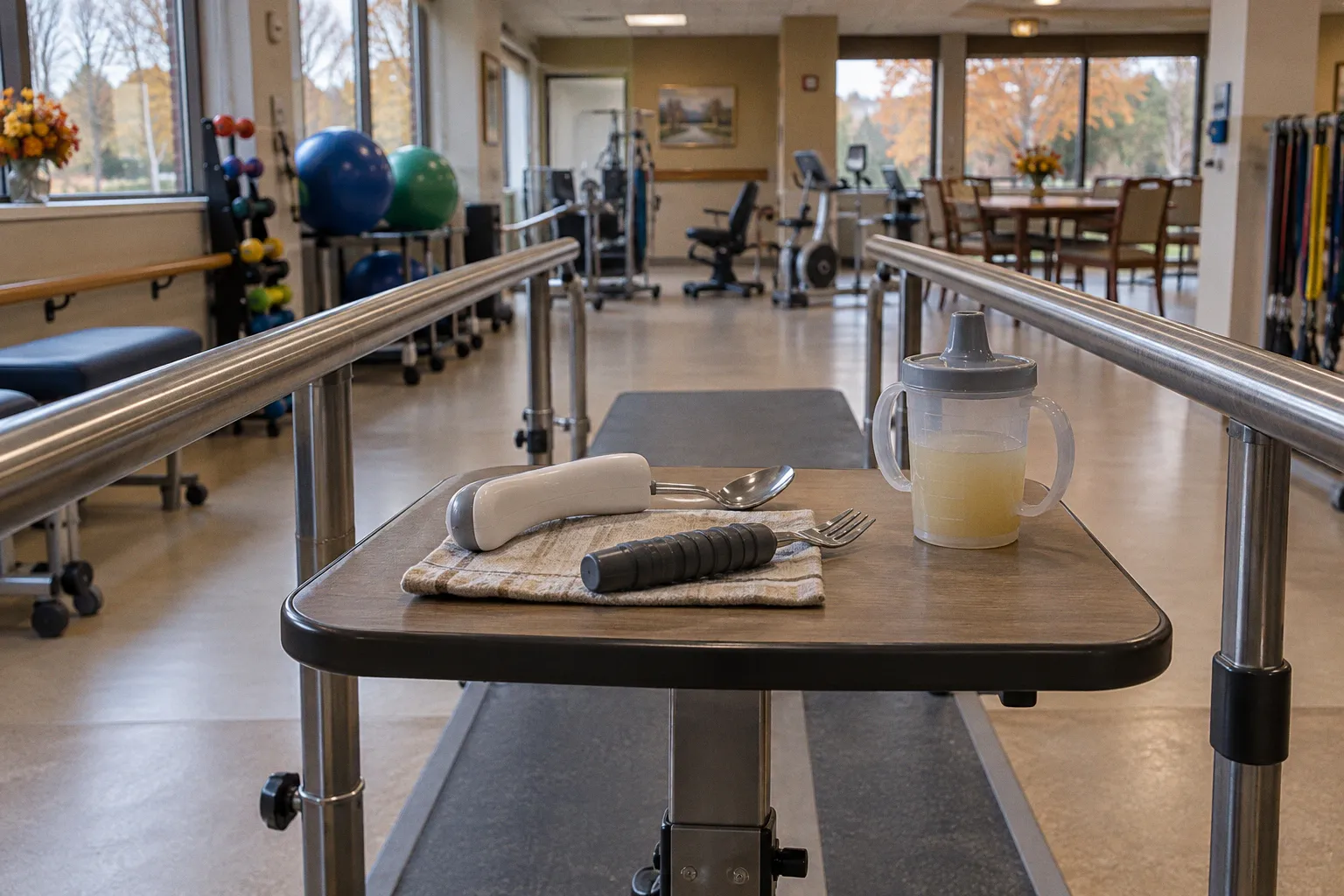
There is another question worth asking alongside those: where is she eating, and with whom? A meal’s setting can shape how much a person eats and whether the meal feels like a welcome part of the day or another task to get through.
Communal dining programs for seniors can support nutrition and social connection, but shared meals are not automatically beneficial. A loud room, an uncomfortable table, or an unsuitable dining companion can make eating harder. The useful question is not simply whether a community offers group meals. It is whether the program works for the people sitting down to them—and whether staff notice when it does not.
The physiological link between commensality and nutrient absorption
Commensality is the practice of eating with others. It sounds like a technical term, but its practical meaning is familiar: a meal is also a social event, and the people around the table can influence its pace and atmosphere.
A relaxed meal may give someone more time to notice hunger, choose what to eat, and finish a portion. Conversation can make a meal more engaging; the presence of others can also offer gentle cues to begin, continue, or slow down. These are plausible ways that social dining may support intake. They are not proof that eating with others directly improves nutrient absorption or changes digestion in a predictable way. Nutrition depends on many factors, including appetite, medication effects, swallowing ability, pain, mood, and the food itself.
Pace deserves particular attention in nursing homes and rehabilitation settings. A person recovering from a stroke or living with dysphagia may need a prescribed texture, positioning support, supervision, or extra time. Conversation and company do not replace those precautions. In some cases, talking while chewing or trying to follow several voices at once can make a meal more difficult. Staff should follow the resident’s swallowing plan and watch for signs of fatigue or difficulty, rather than assuming that a shared table is inherently safer.
The practical value of a social meal is more modest—and more useful—than a sweeping physiological claim. A familiar table, a suitable pace, and a staff member who can help without rushing may make it easier for a resident to participate and eat. For another resident, the same room may be tiring. Dining support has to start with the person, not with a theory about what a meal ought to do.
The company at the table can matter. It does not replace an individualized nutrition or swallowing plan.
Quantifying the impact: caloric intake and dietary diversity in group settings
Research on commensality among older adults has found an association between eating with others and higher food intake. A systematic review and meta-analysis of 21 studies reported that, compared with solitary dining, communal meals were associated with an average increase of about 109 kcal in daily energy intake, about 4 grams in daily fat intake, and about 21 grams in daily meat and seafood consumption.
Those findings offer a reason to take the dining environment seriously, not a guarantee that every resident will eat more at a shared table. The studies report an association; they do not show that the social setting alone caused the difference. Residents who eat with others may differ in health, mobility, appetite, or access to support. And an average across studies cannot predict what one person will eat at one particular meal.
Still, the association matters in care settings where a small, persistent shortfall can add up. If a resident is losing weight or leaving much of each meal untouched, staff should look beyond the menu. Is the dining room comfortable? Is the resident able to get there without becoming exhausted? Does the meal arrive at a workable time? Are food textures, portions, and assistance appropriate? A shared meal can support intake only when the resident can take part in it.
The nutritional impact of group meals for elderly residents also depends on what is served and whether people can eat it. A menu may offer varied choices, but a resident with dental pain, swallowing difficulty, or a changed sense of taste may need different textures or more appealing options. Likewise, a table full of food is not enough if the resident cannot open containers, cut food, reach a drink, or communicate a preference.
When visiting a community during a meal, notice more than what is on the tray:
- Are residents seated comfortably, with enough room to use mobility aids and dining equipment?
- Can people see the food clearly and reach the items they want?
- Is help available without staff taking over or rushing the meal?
- Are residents offered suitable alternatives when they decline a particular dish?
- Does the room feel lively but manageable, or do noise and activity make it hard to follow a conversation?
These details do not establish whether a program is clinically effective. They do help families see whether the dining experience is accessible, attentive, and responsive to residents’ needs.
Solitary dining as a clinical risk factor for geriatric depression
Eating alone and depression are connected in research on older adults, but the relationship should be described precisely. One analysis reported an odds ratio of 1.58 for depression among older adults who ate alone compared with those who shared meals. For dinner alone, the reported odds ratio was 2.13. These are measures of association in the odds of depression, not direct estimates that an individual resident is 1.58 or 2.13 times as likely to have depression. They do not establish that solitary dining causes depression, or that joining a group meal will prevent it.
The distinction matters at the bedside. A resident who prefers to eat alone is not, on that basis, depressed. Some people value quiet or privacy; others may have hearing loss, fatigue, pain, anxiety, or a practical reason for staying in their room. But a new or sustained change in dining habits can be useful information, especially when it appears alongside changes in mood, appetite, sleep, mobility, or participation in other activities.
Depression and poor intake can reinforce one another. Low mood may reduce interest in food and social contact; inadequate intake can contribute to weakness and make everyday activities harder. That pattern is not inevitable, and a shared meal is not a treatment on its own. It can, however, provide an opportunity for connection and make it easier for staff or family to notice that something has changed.
A shift from communal meals to room dining should prompt curiosity rather than an automatic conclusion. The resident may be responding to a recent loss, a change in health, medication effects, difficulty hearing, an uncomfortable seating arrangement, or a dining room that has become too demanding. Ask what would make the meal easier. If the change persists, share it with the nursing team so it can be considered with other observations and assessed appropriately.
| Change noticed at mealtime | Possible considerations | A helpful next step |
|---|---|---|
| A resident who usually joins others begins asking to eat in her room | Mood, fatigue, pain, illness, hearing difficulty, or a change in preference | Ask the resident what has changed and share the observation with the care team |
| Food is repeatedly left untouched on one side of the plate | Dental discomfort, vision changes, swallowing difficulty, or food preference | Check comfort and access; ask nursing or dietary staff to review |
| The resident leaves the table early or seems unsettled | Noise, fatigue, discomfort, need to use the bathroom, or difficulty following conversation | Offer a quieter seat or different timing, and look for a recurring pattern |
| Appetite or intake appears lower across several meals | Health changes, medication effects, mood, portion size, or difficulty eating independently | Record the pattern and request a clinical review |
A single meal is only a snapshot. Patterns across days are more informative, particularly when a family member can add context about what is usual for the resident. That does not make relatives responsible for diagnosing a problem. It makes their observations useful to the people providing care.
Designing dining environments to mitigate sensory overload and cognitive stress
A shared dining room can be welcoming; it can also become exhausting. For residents living with dementia, recovering from delirium, or managing hearing or vision changes, overlapping conversations, glare, poor contrast, and a busy layout may make it difficult to understand what is happening. A resident who becomes agitated or leaves early may be expressing discomfort, not simply rejecting the meal.
The answer is not always to make the room silent. Some residents enjoy a lively table. Others do better with fewer people and less background noise. Staff can make the environment easier to navigate by keeping seating arrangements reasonably consistent, reducing unnecessary noise, ensuring that lighting is comfortable, and placing plates against surfaces that make the food easier to distinguish. Furniture should allow residents to sit securely and reach the table without awkward movement.
Table size and placement matter, but there is no single arrangement that suits everyone. One resident may benefit from a small table with familiar companions. Another may prefer the edge of a larger room, where there is less traffic. Someone with hearing loss may follow conversation more easily when seated where they can see other diners’ faces. A resident who tires quickly may need a shorter walk to the dining room or a meal at a time when energy is better.
A flexible program makes room for these differences without treating room dining as the only alternative to a large shared meal. A quieter table, a smaller group in a familiar common room, or a family meal may preserve companionship while lowering the sensory demands. For some residents, eating in their room is the right choice. The goal is not to enforce socializing; it is to avoid letting a default arrangement decide for the resident.
Families evaluating social dining in assisted living can ask how staff respond when a resident finds the main dining room difficult. Specific examples are more useful than broad assurances. Can the resident move to a quieter table? Is the seating plan reviewed when needs change? How do staff support people who need help with hearing, vision, mobility, or swallowing? Answers will vary by community, but they should show that staff have considered the resident’s experience, not only the room’s capacity.
Balancing infection control with the necessity of social mealtime
Communal dining also raises an infection-control question. Residents in long-term care may be medically vulnerable, and shared spaces require sensible precautions. At the same time, restricting meals to residents’ rooms can reduce opportunities for social contact and make it harder for staff to support people who benefit from assistance at the table. Infection prevention and social dining are not opposing values; decisions need to account for both.
The appropriate response depends on current public-health guidance, the facility’s infection-control plan, and the circumstances of an outbreak. A community may use measures such as careful hand hygiene, improved ventilation, cohorting, or changes to seating and group size. When a resident is ill or under isolation precautions, in-room dining may be necessary. The important point is that restrictions should be guided by the situation and reviewed as it changes, rather than becoming a permanent substitute for a dining program.
Room service also has practical consequences. Delivering trays and supporting residents individually takes staff time, and a room meal can be less social even when the food is identical. That does not mean staff should avoid it when a resident needs it. It does mean a community should be able to explain how it decides who eats in a room, what support is provided there, and when the decision will be reconsidered.
Families can ask how residents who are temporarily unable to join others stay connected, and how staff distinguish a clinical need for isolation from a preference for quiet. They can also ask whether residents have a choice of settings when infection-control measures allow. These are reasonable questions about care, not a request to disregard safety.
What a thoughtful dining program makes possible
A strong communal dining program is not defined by a full room or a polished menu. It is defined by whether residents can participate in a way that suits their health, abilities, preferences, and comfort. That may mean consistent seating for one person, a smaller group for another, and a tray in a quiet room for someone who needs privacy or is temporarily unwell.
For families touring a community, useful questions include:
- How are seating arrangements chosen, and how can a resident request a change?
- What alternatives are available when the main dining room is too busy?
- How do staff accommodate residents with hearing, vision, mobility, or swallowing needs?
- Who helps residents who need assistance during the meal?
- How does the team notice and follow up on changes in appetite or dining habits?
- How are infection-control decisions balanced with opportunities for social contact?
The answers matter, but so does the meal itself. Watch whether staff speak to residents rather than only to one another. Notice whether help is offered respectfully and whether residents have time to eat. See if someone who declines a dish is offered another option, and whether there is a quieter place for a resident who needs one.
Communal dining programs for seniors can support both nutrition and connection, but they are not a substitute for clinical assessment, appropriate food and swallowing plans, or individual choice. The association between shared meals and greater intake gives communities a reason to invest in the experience; it does not justify assuming that one arrangement fits everyone. The best dining programs treat the table as part of care—and pay attention to the person who is sitting at it.
FAQ
Does eating with others directly improve nutrient absorption?
Is solitary dining a direct cause of depression in older adults?
What should staff do if a resident stops joining communal meals?
How can dining environments be adapted for residents with dementia or sensory issues?
How should facilities balance infection control with social dining?
Related articles
 Senior Wellness & LivingSocial activities for introverted seniors in assisted living
 Senior Wellness & LivingAssisted Living Dining Options for Specific Dietary Needs
 Senior Wellness & LivingSeated Exercise Gear for Seniors: What Works and When
 Senior Wellness & LivingGeriatric Protein Drinks: Testing Three Formulations