CMS Staffing Mandate Auditing: What Our Test Revealed
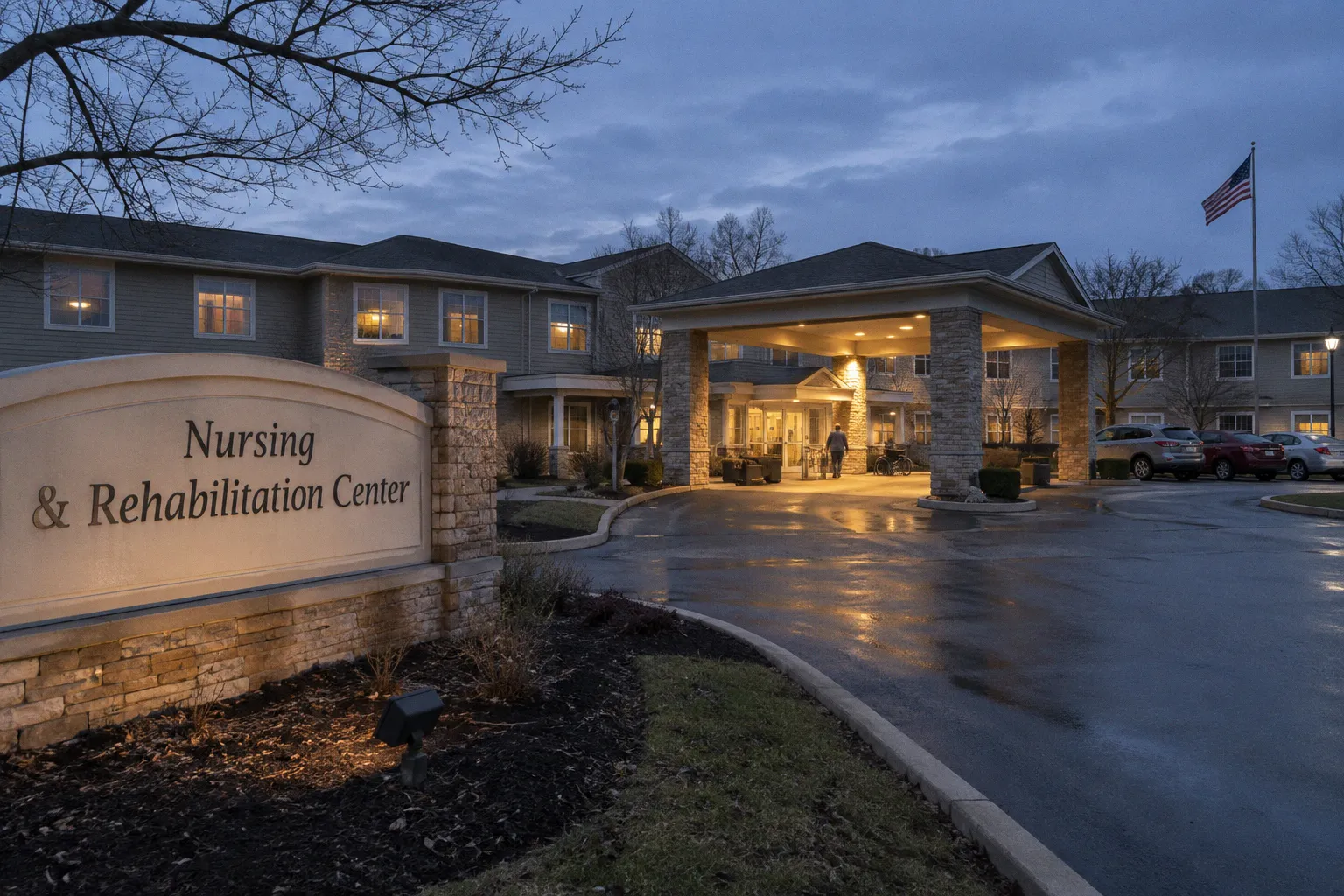
An AHCA/NCAL analysis found that only 6% of facilities satisfied all four requirements at the time of publication: 3.48 total nurse hours per resident day, 0.55 hours of direct RN care, 2.45 hours of nurse aide care, and 24-hour, seven-day on-site RN coverage.
That framework did not remain intact. In December 2025, CMS rescinded the federal 24/7 RN requirement and the national numerical HPRD minimums. The facility assessment requirement remained. The result is a more complicated audit environment, not a less important one. Nursing homes still face scrutiny through Payroll-Based Journal data, state survey inspections, facility assessments, and deficiency citations. The difference is that the federal numerical thresholds no longer function as the central enforcement mechanism.
This review examines the available public evidence behind a nursing home staffing mandate compliance audit. It focuses on what the data can establish, what it cannot establish, and where operators continue to carry financial and regulatory exposure.
The staffing rule changed, but the audit trail did not disappear
CMS finalized the federal staffing rule on April 22, 2024. Its numerical framework was built around three core HPRD thresholds:
- 3.48 total nurse hours per resident day
- 0.55 HPRD of direct registered nurse care
- 2.45 HPRD of direct nurse aide care
The 2024 rule also included a requirement for an RN to be on site 24 hours a day, seven days a week. These provisions were designed to convert staffing adequacy from a largely qualitative survey issue into a measurable federal standard.
That conversion created an immediate operational problem. Staffing is not a single number inside a nursing home. It is a daily production system affected by census, acuity levels, admissions, discharges, agency usage, call-offs, overtime, shift structure, and documentation practices. A facility can meet its weekly labor budget and still experience a material shortage on a particular overnight shift. It can also report acceptable average staffing while assigning too few qualified staff to residents with complex clinical needs.
The federal rescission in December 2025 removed the national numeric floors and the 24/7 on-site RN mandate. It did not remove the need to assess staffing against resident needs. Facilities remain responsible for completing and maintaining a facility assessment that explains the personnel, skills, and competencies required for the residents served.
That distinction matters. A facility assessment is not a substitute for staffing. It is the document that allows regulators to evaluate whether staffing decisions were rational, documented, and connected to actual resident care requirements.
The federal numbers were rescinded. The operational evidence was not.
The current compliance environment therefore has two layers:
1. Numerical reporting through PBJ, which remains an auditable record of hours worked by staff category.
2. Facility-level clinical and operational review, which can identify staffing failures even when the facility is not violating a national HPRD floor.
A nursing home staffing mandate audit that examines only the numerical data is incomplete. A review that ignores the numerical data is equally weak.
How CMS staffing mandate auditing works in practice
The Payroll-Based Journal system is the primary federal data source for reported staffing hours. Long-term care facilities submit daily information about hours worked by different staff categories. The data is used to monitor staffing patterns and identify facilities requiring additional oversight.
PBJ is valuable because it is tied to payroll and timekeeping records rather than a facility’s general description of staffing levels. It can show whether a facility reported RN, licensed practical nurse, and nurse aide hours. It can also expose inconsistencies between staffing claims and the underlying workforce record.
But PBJ is not a complete clinical audit. It records reported labor time. It does not independently establish that residents received appropriate care, that staff possessed the required competencies, or that every scheduled assignment was safely executed.
A serious CMS staffing mandate audit should examine at least five related questions:
1. Were the hours reported in the correct staff categories?
Staff categories are not interchangeable. RN hours cannot be treated as equivalent to nurse aide hours. Agency personnel, contracted staff, and facility employees must be classified consistently with the applicable reporting rules. A category error can distort HPRD calculations even when the total payroll is accurate.
2. Do payroll records support the PBJ submission?
The PBJ submission should reconcile to source records, including:
- Payroll registers
- Timekeeping exports
- Schedule records
- Overtime reports
- Agency invoices
- Contract labor logs
- Sign-in and sign-out records
- Corrections to missed punches
- Records of leave, training, and nonproductive time
A facility that cannot reproduce the path from payroll record to PBJ submission has a data governance problem. The issue is not limited to a possible reporting error. It raises a broader question about whether management knows its actual staffing position.
3. Do daily staffing patterns match resident demand?
Average HPRD can hide operational instability. A facility may report an acceptable average while relying heavily on a small number of high-staffing days to offset repeated shortages. The more relevant analysis is often day-level and shift-level.
A review should isolate:
- Weekday versus weekend coverage
- Day, evening, and overnight staffing
- Admission and discharge days
- High-census periods
- Days with multiple call-offs
- Agency-heavy shifts
- Days involving serious clinical incidents
- Periods with elevated hospital transfers or emergency calls
This is where a nursing home HPRD calculation test becomes useful. The purpose is not merely to reproduce a federal formula. It is to determine whether the reported average reflects the staffing conditions that residents actually experienced.
4. Does the facility assessment support the staffing model?
The facility assessment should identify the resident population and the staffing capabilities required to meet its needs. It should account for resident acuity, specialized services, behavioral needs, clinical programs, and the competencies required on each shift.
A generic assessment is weak evidence. Statements that the facility has adequate staff, without a clear connection to resident characteristics and service requirements, provide little protection during an inspection.
The stronger document ties staffing decisions to operational facts. For example, it may distinguish between a low-acuity unit and a post-acute rehabilitation unit with complex medication regimens, intravenous therapy, wound care, bariatric residents, or higher rates of therapy coordination. It may explain how RN coverage is allocated when the facility has both long-term residents and short-stay Medicare patients.
5. Do survey findings contradict the staffing narrative?
State survey agencies examine actual care delivery. Deficiency citations may involve missed treatments, delayed response, medication errors, incomplete assessments, poor care planning, or failures in monitoring. Those findings may not be labeled as staffing violations, but they can indicate that the staffing model was inadequate for the facility’s resident population.
PBJ compliance does not create immunity from those findings. A facility can report its hours accurately and still receive citations because staffing was insufficient in context, staff were not properly deployed, or the organization failed to provide the competencies required by the resident population.
PBJ accuracy is a financial control, not just a reporting task
Payroll-Based Journal data is often treated as a regulatory submission handled by payroll or an administrative office. That approach is operationally weak. PBJ is also a financial control because staffing hours affect reimbursement analysis, labor forecasting, agency spending, and the facility’s reported compliance profile.
The data should be reviewed as a reconciliation process. The objective is to identify whether the same staffing event appears consistently across the operating system.
| Audit area | Primary record | Typical failure | Operational consequence |
|---|---|---|---|
| Employee hours | Payroll and timekeeping data | Missed punches or uncorrected edits | Underreported or overstated HPRD |
| Agency hours | Vendor invoices and shift logs | Invoice totals do not match worked hours | Distorted staffing and labor expense |
| Staff classification | HR records and PBJ categories | RN, LPN, aide, or contractor misclassification | Incorrect category-level thresholds |
| Shift coverage | Schedules and assignment sheets | Scheduled hours treated as worked hours | False appearance of coverage |
| Overtime | Payroll reports | Overtime omitted or assigned to wrong date | Inaccurate daily staffing profile |
| Facility assessment | Clinical and operational records | Generic document not updated for acuity | Weak defense against deficiency citations |
| Survey response | Plans of correction and incident records | Staffing issues handled as isolated events | Failure to identify systemic exposure |
The most material errors are often mundane. A facility may have a payroll export that uses pay-period totals while PBJ requires daily reporting. A timekeeping system may record a shift under the date it began rather than the date on which most hours were worked. Agency invoices may show billed hours rather than verified worked hours. Corrections may be made in one system and not carried through to another.
These problems do not automatically prove noncompliance. They do create audit risk. The more difficult it is to reconcile the records, the more difficult it becomes for an operator to defend the accuracy of the submission.
The 2024 thresholds were difficult to meet because staffing is not evenly distributed
The AHCA/NCAL analysis estimated that only 6% of nursing homes met all four requirements under the 2024 framework. That figure should not be interpreted as a universal federal inspection result. It was an industry analysis of compliance with the combined requirements at the time of publication.
Still, it illustrates the burden created by cumulative thresholds. A facility could meet the total 3.48 HPRD figure and fail the RN threshold. It could meet the total and RN measures while falling below the nurse aide threshold. It could satisfy all three numerical calculations and still fail the 24/7 RN requirement.
The combined test was therefore more demanding than any individual metric suggested.
A simple average also creates a structural problem. HPRD is calculated against resident days. That means the denominator moves with census. When occupancy rises, the facility must generate more hours to maintain the same HPRD. When occupancy falls, a facility can appear to improve its HPRD without adding staff.
Acuity levels complicate the picture further. Two facilities with identical census figures may have materially different staffing requirements. One may serve mostly stable long-term residents. Another may operate a high-volume post-acute rehabilitation program with frequent admissions, complex medication administration, wound care, therapy coordination, and discharge planning.
The numerical model can identify staffing volume. It cannot independently determine whether the staffing mix is clinically appropriate.
Why averages conceal risk
Consider a facility that reports strong staffing on weekdays and materially lower coverage on weekends. Its weekly average may appear acceptable. Residents, however, receive care every day. If medication administration, wound care, repositioning, response to changes in condition, and care-plan execution are affected by recurring weekend shortages, the average becomes a poor measure of performance.
The same issue applies to overnight coverage. A facility may rely on one RN overseeing multiple units while aides cover a large resident population. If the organization has high fall risk, complex treatments, or frequent toileting and transfer needs, the staffing model may fail even without a clear national numerical violation.
This is why survey agencies continue to matter after the federal numerical floors were rescinded. State inspections can evaluate whether the facility’s staffing system produced actual care failures.
The HHS OIG finding exposes a weakness in the screening model
A June 2025 HHS Office of Inspector General report found that CMS primarily targeted nursing homes reporting zero RN hours in PBJ data for state survey agency oversight. The screening approach did not identify all facilities providing fewer than eight hours of daily RN coverage.
That is a significant distinction. Zero reported RN hours is an obvious data signal. A facility with some RN hours every day may avoid that particular trigger while still operating with limited daily coverage.
The finding does not establish that CMS ignored all other staffing risks. It does show that a narrow automated screen can miss patterns that are operationally important. An audit methodology based only on an extreme threshold will understate exposure.
A more complete review should test for patterns such as:
- Repeatedly low RN coverage
- Heavy dependence on one RN for multiple units
- Persistent agency reliance
- High overtime combined with turnover
- Large differences between scheduled and worked hours
- Repeated staffing reductions on weekends and holidays
- Nurse aide shortages during peak care periods
- Staffing instability following census growth
- Delayed documentation or treatment completion
- Clinical incidents concentrated on low-coverage shifts
These indicators do not replace official survey findings. They provide a more realistic view of institutional risk.
The financial impact reaches beyond direct labor expense
The industry estimate associated with the 2024 mandate projected an annual cost of approximately $6.5 billion for 102,000 additional nurses and aides. That estimate reflected the scale of workforce expansion required under the federal framework, not a guaranteed cost for every facility.
The operational consequences were broader than payroll. Additional staffing affects:
- Wage rates
- Overtime
- Agency utilization
- Recruitment costs
- Retention incentives
- Training and orientation
- Scheduling administration
- Benefits expense
- Management coverage
- Reimbursement sufficiency
The central financing problem is that labor expense moves faster than reimbursement in many nursing home payment systems. Medicare reimbursement for skilled nursing services is tied to patient classification and covered services. Medicaid reimbursement is governed by state-specific methodologies and may not reflect the full cost of labor required to meet resident needs. Long-term care insurance and private-pay arrangements operate under separate contract and coverage rules.
A facility may therefore face a gap between the cost of compliant staffing and the revenue generated by its payer mix. Medicare-heavy post-acute operators can have different staffing economics from Medicaid-heavy long-term care facilities. A single facility may contain both models, creating competing operational pressures within the same building.
Reimbursement thresholds do not eliminate staffing liability
Payment classification can affect revenue, but it does not excuse staffing deficiencies. A facility cannot use low reimbursement, high Medicaid census, or inadequate labor budgets as a substitute for a defensible staffing plan.
The practical question for operators is whether staffing assumptions are built into financial planning before the schedule is published. A budget that treats agency labor as an emergency expense will become inaccurate when vacancies persist for months. A budget that assumes full occupancy may fail when census fluctuates. A budget that counts scheduled hours rather than worked hours will overstate available coverage.
The financial review should connect three data sets:
1. Resident demand: census, acuity levels, admissions, discharges, and clinical programs.
2. Available labor: worked hours, skill mix, vacancies, agency usage, overtime, and turnover.
3. Reimbursement and cash flow: Medicare utilization, Medicaid rates, private-pay revenue, denied claims, and labor-related operating costs.
Without that connection, the facility is not managing staffing. It is reporting after the fact.
What a defensible audit file should contain
A nursing home preparing for regulatory review should be able to reconstruct its staffing position without relying on institutional memory or informal explanations. The audit file should connect the reported numbers to operational records.
A practical file generally includes:
1. Daily PBJ submissions and correction history.
The record should show what was submitted, what was amended, and why changes were made.
2. Payroll and timekeeping reconciliation.
Hours should be matched by date, staff category, employee or contractor status, and facility location.
3. Agency documentation.
Vendor invoices should be compared with sign-in records, shift assignments, and verified worked hours.
4. Daily staffing reports.
These should distinguish scheduled coverage from actual coverage and document call-offs, replacements, and uncovered shifts.
5. Facility assessment records.
The assessment should identify the resident population, required competencies, specialized services, and staffing assumptions.
6. Acuity and census analysis.
Staffing levels should be evaluated against changes in resident needs rather than only against occupancy.
7. Incident and deficiency analysis.
Falls, medication errors, missed treatments, hospital transfers, and survey citations should be reviewed for concentration by shift, unit, and staffing level.
8. Corrective action documentation.
The facility should be able to show how recurring staffing weaknesses were identified and addressed.
This is not a paperwork exercise. The file demonstrates whether management has a functioning control system. It also establishes whether staffing decisions were deliberate or merely reactive.
The main compliance risk is inconsistency
A facility’s greatest exposure may not be a single low-staffing day. It may be inconsistency between different versions of the same operational reality.
Examples include:
- PBJ data showing more hours than payroll records support
- Schedules showing coverage that timekeeping records do not confirm
- A facility assessment describing competencies not present on the schedule
- Staffing reports showing adequate coverage while incident records show repeated delays
- Agency invoices that do not match shift documentation
- A plan of correction that addresses an isolated citation while the underlying staffing trend continues
Regulators do not need to accept the facility’s preferred document as the definitive record. Inconsistencies create room for a broader review and can undermine the credibility of the operator’s explanation.
The same principle applies to state-level enforcement after the federal rescission. National HPRD minimums no longer provide a simple pass-fail test, but state surveyors can still evaluate whether the facility had sufficient staff to meet resident needs and whether the facility assessment was credible.
That shifts the compliance strategy from threshold management to evidence management. Operators must show not only how many hours were reported, but why those hours were appropriate for the residents served.
The defensible staffing model is not the one with the cleanest average. It is the one that survives reconciliation against payroll, resident acuity, and survey findings.
What changed for operators after the federal rescission
The December 2025 rule change reduced the immediate risk of federal enforcement based solely on the national HPRD floors. It did not return the industry to an environment in which staffing can be managed informally.
Three consequences follow.
Federal numerical enforcement is less direct
Facilities should not describe the rescinded 3.48 HPRD, 0.55 RN HPRD, or 2.45 nurse aide HPRD thresholds as continuing federal minimums. That would misstate the regulatory position.
Those figures remain relevant for historical analysis, internal benchmarking, and understanding the operational burden created by the 2024 rule. They should not be presented as current national numeric floors when the federal requirements have been rescinded.
Facility assessments carry more weight
With the national numerical test removed, the facility assessment becomes a more important explanation of how staffing adequacy is determined. A facility that cannot show a credible connection between resident needs and staffing decisions will have a weaker position during survey review.
State standards remain material
State standards and survey practices continue to influence enforcement. The exact frequency and approach may vary by jurisdiction. A federal rescission does not eliminate state-level staffing rules, licensure requirements, or deficiency enforcement.
Operators therefore need a state-specific compliance matrix. It should identify applicable staffing standards, reporting requirements, survey triggers, and documentation expectations. A national policy memo is not enough.
Bottom-line assessment
The available evidence does not support the idea that PBJ reporting alone determines staffing compliance. It also does not support treating the 2024 federal HPRD thresholds as current national enforcement floors after their rescission.
The more accurate conclusion is narrower and more useful: staffing compliance is now a layered audit problem. PBJ data establishes a reported labor baseline. Payroll and timekeeping records test the accuracy of that baseline. Facility assessments explain the staffing model. Resident acuity and clinical outcomes test whether the model was adequate. State surveys determine whether operational failures become deficiency citations.
The financial risk is equally layered. A facility can face higher labor costs, agency dependence, reimbursement pressure, and survey exposure at the same time. The absence of a national numerical floor does not remove those costs. It makes the documentation and operational argument more important.
For nursing home operators, the control priority is clear: reconcile reported hours to worked hours, evaluate staffing by shift rather than only by average, connect the schedule to acuity levels, and maintain a facility assessment that reflects the actual resident population. For regulators and analysts, the limitation is equally clear: extreme PBJ signals such as zero RN hours identify only part of the problem.
The final test is not whether a facility can produce a compliant-looking number. It is whether the number remains credible when compared with payroll, staffing assignments, resident needs, clinical incidents, and survey evidence.
FAQ
What staffing requirements did CMS rescind in December 2025?
What is PBJ data used for in a nursing home staffing audit?
Can a nursing home meet average HPRD and still have staffing problems?
What records should support a PBJ submission?
Does accurate PBJ reporting protect a facility from staffing deficiency citations?
Why is the facility assessment important after the federal staffing rule rescission?
Related articles
 Policy & Healthcare FinancingMedicare benefit periods in nursing homes: cost implications
 Analyzing the Impact of Lower Medicare Advantage SNF Utilization Rates
 Does Medicare pay for long-term care? Many people get it wrong — and it may cost them later
 Policy & Healthcare FinancingHybrid Long-Term Care Policies for Every Need